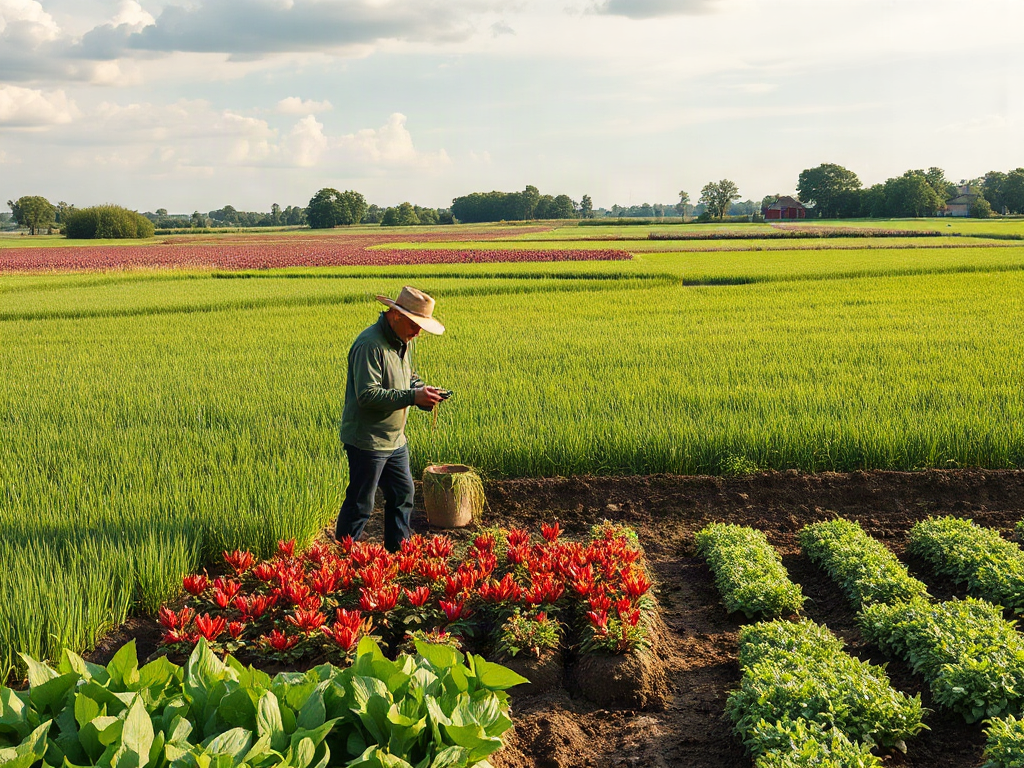
Quick Answer: Organic farming is a production system that builds soil fertility, manages pests through preventive and ecological methods, restricts many synthetic inputs, and follows defined rules for crops, livestock, and handling. When used as a regulated market claim, “organic” generally requires records, inspections, and certification; it does not simply mean natural, local, or completely pesticide-free.
Why This Happens: The term is often misunderstood because it describes an entire management system, while advertising sometimes reduces it to one feature, such as avoiding synthetic pesticides. Organic standards instead combine approved inputs with crop rotation, soil care, animal-management requirements, separation, and traceability.
How To Fix It:
- Check products for a recognized organic seal or certification statement rather than relying on words such as natural or eco-friendly.
- Ask growers about certification, soil-building methods, crop rotations, pest monitoring, and any controls used when a problem occurs.
- Before converting a farm, document field and input history and contact an authorized certifier about land, seed, livestock, and record requirements.
- In a home garden, begin with soil assessment, compost, crop diversity, mulch, and correct pest identification before selecting any treatment.
Organic farming means producing crops and livestock through methods designed to support soil health, ecological balance, animal welfare, and responsible use of natural resources. Rather than relying routinely on synthetic fertilizers, most synthetic pesticides, genetically engineered seeds, or preventive antibiotics, organic farmers use practices such as crop rotation, composting, biological pest control, cover crops, and careful grazing. The word also has a regulatory meaning: food generally must meet an applicable organic standard and pass a certification process before it can be marketed with a regulated organic label.
Organic farming is both a method and a regulated claim
In everyday conversation, people sometimes use “organic” to describe anything natural, homemade, or grown without pesticides. That is too broad. Organic farming is a defined production system with rules governing how land, plants, animals, and farm inputs are managed. Exact requirements depend on the country and certification program, but they commonly cover seeds, soil fertility, pest management, livestock feed, health care, housing, recordkeeping, processing, and measures that prevent prohibited materials from contaminating organic products.
This distinction matters because a farmer can follow several environmentally friendly practices without operating a certified organic farm. A small grower might avoid synthetic pesticides, build soil with compost, and rotate vegetables but choose not to pursue certification. That produce may accurately be described in specific terms—such as “grown without synthetic pesticides”—but it should not automatically be treated as certified organic. For a related overview of the term, see the meaning of organic farming.
Certification creates a documented chain of accountability. A participating farm typically develops an organic production plan, records what it buys and applies, keeps organic goods separate from non-organic goods, and undergoes inspection by an authorized certifier. Certification is not a claim that every product is identical or that no problem can occur. It verifies that the producer follows the designated standard and maintains the required records and controls.
How organic farmers build fertile soil
Healthy soil is central to organic crop production. Conventional soluble fertilizer can deliver nutrients directly, while organic systems place greater emphasis on feeding and protecting the soil ecosystem so that nutrients cycle over time. Farmers may apply composted plant material or manure, plant legumes that help add biologically available nitrogen, grow cover crops between cash crops, rotate plant families, and reduce erosion with mulch or living roots.
Crop rotation is especially useful. Planting the same crop repeatedly can encourage particular pests and diseases while drawing heavily on the same nutrients. Alternating crops interrupts some pest cycles and spreads nutrient demands. For example, a farmer might follow a demanding vegetable crop with a legume cover crop, then plant a crop from another botanical family. The best sequence depends on climate, soil, farm size, markets, and the specific pests present.
Organic does not mean that a farm applies nothing to its fields. Farmers can use approved fertilizers, soil amendments, pesticides, and biological products when they comply with the relevant standard. Compost itself must be prepared and handled appropriately, especially when manure is involved. Home growers interested in this part of the system can explore how organic garden compost supports soil rather than assuming that every bag labeled natural is suitable for certified production.
Soil-building practices have limits. Compost can contain excessive nutrients or contaminants if its ingredients are poorly controlled, tillage can damage soil structure when overused, and cover crops require land, water, seed, labor, and management. Organic farming therefore involves planning and measurement, not simply replacing a synthetic product with a natural one.
How weeds, insects, and diseases are managed
Organic farmers do not ignore pests. They generally use a layered strategy that begins with prevention. Crop rotation, resistant varieties, planting dates, sanitation, balanced fertility, habitat for beneficial insects, row covers, traps, cultivation, mulches, and close field monitoring can reduce the chance that a pest becomes economically damaging. Livestock farmers likewise use hygiene, appropriate nutrition, suitable stocking levels, outdoor access where required, and preventive husbandry to reduce disease pressure.
If preventive measures are not enough, a farmer may use biological or mineral-based controls and other substances permitted by the applicable organic rules. Approval is specific: a material’s natural origin does not automatically make it allowed, harmless, or appropriate. Some naturally derived pesticides can affect pollinators, aquatic life, workers, or beneficial organisms. They still require correct identification of the problem, careful timing, label compliance, protective equipment, and the lowest effective intervention.
This is why “pesticide-free” is not a reliable synonym for organic. Organic standards restrict and regulate pesticide choices, but certified farms may use permitted pesticides. Conversely, a noncertified farm might use no pesticide on a particular crop. Shoppers who want details can ask a farmer what was applied, why it was needed, and how pests were monitored instead of drawing conclusions from one broad label.
What organic means for animals and mixed farms
For livestock, organic management usually extends beyond the absence of one medication. Standards can govern organic feed, access to appropriate outdoor areas or pasture, living conditions, animal origin, health records, and treatment practices. The exact rules vary by species and jurisdiction, so a label should be interpreted according to the certification program shown on the package.
Organic standards do not permit a farmer to withhold necessary care from a sick animal merely to preserve its organic status. The animal must be treated when treatment is required, although use of a prohibited medicine may mean that animal or its products can no longer be sold as organic. This creates a clear distinction between caring for the animal and deciding how its products may subsequently be marketed.
Mixed farms, which handle both organic and non-organic production, need separation and traceability. Seed, feed, harvested crops, storage areas, equipment, and sales records may require controls that prevent substitution or unintended mixing. Buffer areas can also help reduce drift from neighboring land. Organic rules typically focus on whether prohibited materials were intentionally used and whether the producer took required precautions; they cannot promise that every product will contain absolutely zero environmental residue.
What the organic label does and does not tell you
An organic label primarily explains how an agricultural product was produced and handled. It does not, by itself, guarantee that a food is local, freshly harvested, minimally packaged, inexpensive, or nutritionally superior in every respect. An organic tomato shipped a long distance remains organic if it meets the standard, while a tomato from a nearby uncertified farm is not automatically organic. Local and organic answer different questions.
The label also does not prove that a farm has no environmental impact. Organic farms still use land, fuel, machinery, irrigation, packaging, and labor. Results differ according to the crop and the quality of management. A well-designed system may improve soil cover, biodiversity, or nutrient cycling, while poor timing, excessive tillage, erosion, or badly managed inputs can create problems under any production label. Organic certification establishes a baseline process standard, not a guarantee of perfection.
Similarly, organic and sustainable overlap without being interchangeable. Sustainability can include water conservation, worker well-being, energy use, financial resilience, habitat protection, waste reduction, and many other concerns that may extend beyond organic certification. A farm may satisfy organic rules while still working to improve in those areas. A non-organic farm may also use valuable conservation practices. The distinction is explored further in this guide to sustainable vegetable gardening.
When shopping, read the whole label rather than relying on green packaging or words such as “natural.” Look for the recognized organic seal or certification statement used in your jurisdiction, identify the certifier when shown, and check which ingredients the claim covers. Processed products can carry different organic claims depending on the proportion and status of their ingredients. “Natural,” “regenerative,” “free-range,” and “non-GMO” may communicate other attributes, but they are not substitutes for a certified organic claim.
Putting the meaning into practice
For a gardener or farmer, adopting organic methods starts with observation rather than a shopping list. Test the soil where appropriate, identify weeds and pests correctly, document field history, plan rotations, choose adapted varieties, and determine which inputs comply with the intended standard. Anyone planning to sell certified products should contact an authorized certifier before making major purchases or assuming that land, seed, fertilizer, feed, or pest controls qualify.
For consumers, the practical meaning is simpler: organic indicates production under a defined set of restrictions and required management practices that has been verified when certification applies. It does not mean untouched by human intervention, completely residue-free, or automatically better on every measure. Use the label for what it can reliably tell you, then consider price, freshness, origin, packaging, dietary needs, and farming priorities separately.
In short, organic farming is a planned and accountable way of producing food that prioritizes soil-building, ecological pest management, restricted inputs, traceability, and defined livestock practices. Its value lies in the complete system rather than any single product or technique. Understanding both the rules and their limits makes it easier to evaluate farms, interpret labels, and choose methods that fit a garden or agricultural business.
Popular Questions
Can organic farmers use pesticides?
Yes. Organic farmers may use pesticides and biological controls permitted under the applicable organic standard, usually after preventive and nonchemical options have been considered. Natural origin alone does not make a product approved or harmless. Every treatment still needs correct pest identification, suitable timing, label compliance, and precautions for people, pollinators, water, and other organisms.
Is locally grown food automatically organic?
No. “Local” describes where food was produced or sold, although the exact distance may not be standardized. “Organic” refers to compliance with a production and handling standard. Nearby farms can use excellent soil and pest practices without being certified, while certified organic food may travel a considerable distance before reaching the shopper.
Does an organic label guarantee better nutrition?
An organic label verifies a production method rather than a fixed nutritional outcome. Nutrient content can vary with crop variety, soil, weather, maturity, storage, and preparation. Organic food can fit a nutritious diet, but the label alone does not establish that every organic version contains more nutrients than every conventionally produced alternative.
Can a home garden be managed organically without certification?
Yes. A home gardener can use compost, rotations, cover crops, physical barriers, mulch, resistant varieties, and permitted pest controls without seeking certification. Certification mainly matters when products are marketed with a regulated organic claim. Gardeners should still read product labels carefully because “natural” does not necessarily mean safe or accepted under organic standards.