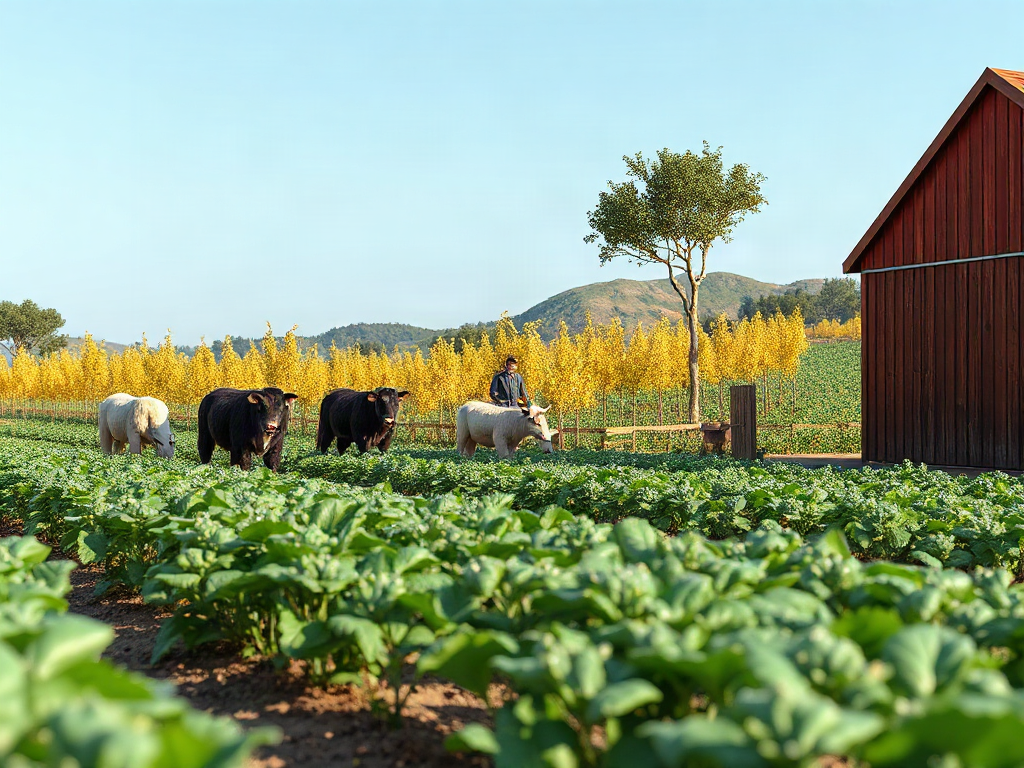
Quick Answer: Organic farming is a production system that builds soil health, cycles nutrients, encourages biodiversity, and prevents pests through rotations, cover crops, biological controls, and other ecological practices. It restricts many synthetic fertilizers and pesticides, genetically engineered organisms, and routine drug use in livestock. When “organic” appears as an official marketplace claim, it also indicates compliance with a regulated certification standard.
Why This Happens: The term is often misunderstood because it describes both an ecological approach and a legally controlled label. Organic farms can use approved fertilizers and pesticides, but they must prioritize preventive management and follow restrictions governing materials, livestock care, contamination controls, documentation, and sales claims.
How To Fix It:
- Check whether an organic claim carries a recognized certification label rather than relying on words such as natural or local.
- Ask a farmer how soil fertility, crop rotation, pest monitoring, animal health, and contamination risks are managed.
- Before using any farm input, verify its complete formulation and allowed status with the relevant certifier or organic authority.
- Start a small organic growing plan with a soil test, a crop rotation, compost used at an appropriate rate, and regular pest scouting.
Organic farming is a way of producing crops and livestock that relies on ecological processes, careful soil management, biological diversity, and restricted inputs rather than routine use of synthetic fertilizers, most synthetic pesticides, genetically engineered organisms, or preventive antibiotics. Its meaning includes both a farming philosophy and, when products are sold as certified organic, a regulated production system. The central aim is not simply to replace one chemical with another. It is to create a resilient farm in which healthy soil, crop rotations, beneficial organisms, appropriate animal care, and preventive management work together.
The basic meaning of organic farming
At its simplest, organic farming means managing a farm as a connected living system. Soil condition affects plant health, plant diversity influences insects and diseases, and livestock can contribute manure and help cycle nutrients. Instead of treating each problem in isolation, an organic farmer tries to prevent problems through the design and management of the whole operation.
For crops, this can include rotating plant families, growing cover crops, adding compost, protecting habitat for beneficial insects, and choosing varieties suited to local conditions. For animals, it generally includes organic feed, access to appropriate outdoor conditions, and health practices centered on prevention and humane care. Exact requirements depend on the organic standard and jurisdiction involved.
The word also has a legal marketplace meaning. A farmer may use ecological methods without being certified, but certification is normally required to market products with an official organic claim, subject to applicable rules and exemptions. Certification involves following a defined standard, maintaining records, and undergoing oversight. This distinction matters: “natural,” “local,” “pesticide-free,” and “sustainable” may describe useful qualities, but they do not automatically mean certified organic.
How an organic farm manages soil and fertility
Healthy soil is the foundation of organic production. Farmers seek to feed soil organisms and maintain soil structure rather than depending mainly on highly soluble synthetic fertilizer. Common practices include compost application, animal manure managed under specific restrictions, legume cover crops, green manures, crop residues, and carefully selected mineral materials. These sources release nutrients in different ways, so farmers still need soil tests, nutrient planning, and suitable application rates.
Crop rotation is especially important. Growing the same crop repeatedly can favor certain weeds, pests, diseases, and nutrient imbalances. A rotation might alternate a heavy-feeding vegetable with a legume cover crop, followed by a crop from another plant family. Legumes can work with soil bacteria to add biologically fixed nitrogen, while deep-rooted cover crops may capture nutrients and improve soil structure.
Compost is useful, but it is not automatically safe, balanced, or suitable for every field. Its source, maturity, nutrient content, and application rate matter. A closer look at organic garden compost helps explain the difference between decomposed organic material and a complete fertility plan. Excessive organic amendments can contribute too much phosphorus or salts, while poorly handled manure can create contamination risks. Organic management therefore requires measurement and restraint, not merely adding more natural material.
How weeds, pests, and diseases are controlled
Organic does not mean that farmers ignore pests or never use pesticides. It means they emphasize prevention and nonchemical controls, while limiting applied products to those permitted under the relevant standard. A pesticide can come from a natural source and still have environmental or human-health risks, so its label, application rate, timing, and protective requirements remain important.
Prevention comes first
Farmers may select resistant varieties, adjust planting dates, rotate crops, use clean seed, maintain airflow, manage irrigation, and provide habitat for predators and pollinators. Row covers, traps, cultivation, mulches, grazing, mowing, and hand removal can also control problems. Regular field scouting helps identify an issue before it becomes severe and allows the farmer to choose a targeted response.
If those measures are insufficient, a farmer may consider an allowed biological, botanical, mineral, or other approved input. Permission is not based solely on whether a product sounds natural. Its ingredients, formulation, intended use, and status under the applicable organic rules must be checked. Certification agencies can help certified operations determine whether a planned material is allowed before it is purchased or applied.
This approach is often described as integrated management: understand the pest, monitor its level, reduce the conditions that favor it, and intervene only as needed. It can demand more observation and timely labor than a routine spray schedule. Results also vary by crop, climate, soil, and pest pressure, so there is no single organic recipe for every farm.
What organic livestock farming means
Organic livestock production connects animal care with feed production, land management, and recordkeeping. Animals generally must receive certified organic feed, and prohibited substances cannot be used merely to maintain an organic label. Standards may also address living conditions, outdoor access, pasture for certain animals, and the handling of manure. The details differ among species and regulatory systems.
Preventive health management is essential. Farmers can choose adapted breeds, provide balanced nutrition, maintain sanitation, reduce stressful conditions, and use appropriate housing and grazing plans. Organic status must never be placed above animal welfare. When an animal is sick, necessary treatment should not be withheld; however, using a prohibited medication may mean that the treated animal or its products can no longer be marketed as organic under the governing rules.
Livestock can support a farm’s nutrient cycle by converting forage and crop by-products into food and manure. Poorly planned integration, however, can cause overgrazing, nutrient runoff, soil compaction, or pathogen risks. Stocking rate, pasture recovery, water protection, manure storage, and application timing are therefore as important as the origin of the feed.
Organic methods and organic certification are not identical
Someone can grow vegetables with compost, rotations, and biological pest control without operating a certified organic farm. This is common in home gardens and may also occur on farms that do not make certified claims. For a practical small-scale comparison, organic vegetable gardening shows how organic and broader sustainable practices can overlap without being identical.
Certification turns the term into a verifiable claim. In the United States, a producer seeking certification generally develops an organic system plan explaining crops or livestock, field histories, fertility practices, pest management, inputs, recordkeeping, and safeguards against contamination or mixing. An accredited certifying agent reviews the plan, conducts inspections, and evaluates compliance. Other countries have their own authorities, labels, and detailed rules.
Records make traceability possible. Seed purchases, input applications, harvest amounts, storage, transport, and sales may all need documentation. Buffer areas or other controls may be necessary where neighboring activities create a risk of contact with prohibited substances. Certification does not promise that no residue can ever be detected; it verifies that required practices, restrictions, and oversight have been followed.
Consumers should therefore look for a recognized organic certification label when they want a regulated claim. Farm descriptions such as “regeneratively grown” or “spray-free” may communicate other practices, but their meaning should be confirmed directly. Asking how fertility, pests, livestock, and records are managed provides more information than relying on a vague green image or the word “natural.”
What organic farming can and cannot promise
Organic farming can support soil-building practices, crop diversity, reduced reliance on many synthetic inputs, and more preventive management. Those are meaningful features, but the label does not guarantee that every organic farm has perfect soil, no environmental footprint, superior flavor, or higher nutrient levels. Farming of every type uses land, water, energy, labor, and pest-control decisions.
Outcomes depend on how well the system is managed. Intensive tillage can erode organic soil, poorly timed manure can lose nutrients, and an approved pesticide can still harm organisms if misused. Conversely, a noncertified farm may use several sound ecological practices. The most useful comparison considers both the production standard and the actual management choices rather than treating “organic” as a simple synonym for good.
The term also concerns production methods, not a complete judgment about a food’s health value. Variety, freshness, storage, preparation, and the overall diet remain relevant. Readers considering that separate issue can explore whether organic food is better without confusing nutritional questions with the definition of farming.
In practical terms, organic farming means prevention before treatment, soil stewardship before quick nutrient fixes, and documented compliance when an official claim is made. It is best understood as a managed ecological system with clear limits—not as farming without inputs, technology, or difficult trade-offs.
Popular Questions
Can organic farmers use pesticides?
Yes, but they cannot simply use any pesticide described as natural. Organic systems prioritize resistant varieties, rotations, barriers, beneficial organisms, cultivation, and monitoring. If further control is needed, farmers may use products permitted by the applicable standard and must follow label directions. Approved products can still carry risks, so careful selection and targeted application remain necessary.
Is food grown without pesticides automatically organic?
No. Avoiding pesticides addresses only one part of production. Certified organic standards can also govern soil fertility, seeds, prohibited inputs, genetic engineering, livestock feed and care, handling, recordkeeping, and protection against mixing or contamination. A farm may use pesticide-free methods without certification, but it generally cannot make an official certified organic claim unless it meets the relevant requirements.
Does organic farming avoid all fertilizers?
No. Crops remove nutrients from fields, so organic farms must replace and cycle them responsibly. They may use compost, properly managed manure, legume cover crops, crop residues, and permitted mineral or biological materials. Soil testing and nutrient planning are still important because natural materials can create nutrient imbalances, salt problems, runoff, or contamination when they are poorly chosen or overapplied.
Are organic and sustainable farming the same thing?
They overlap, but they are not interchangeable. Organic certification follows a defined standard focused on permitted practices, restricted materials, records, and inspections. Sustainability is a broader idea that may also consider water use, energy, labor, economic viability, packaging, and local conditions. An organic farm can improve its sustainability, while a nonorganic farm may use some valuable conservation practices.