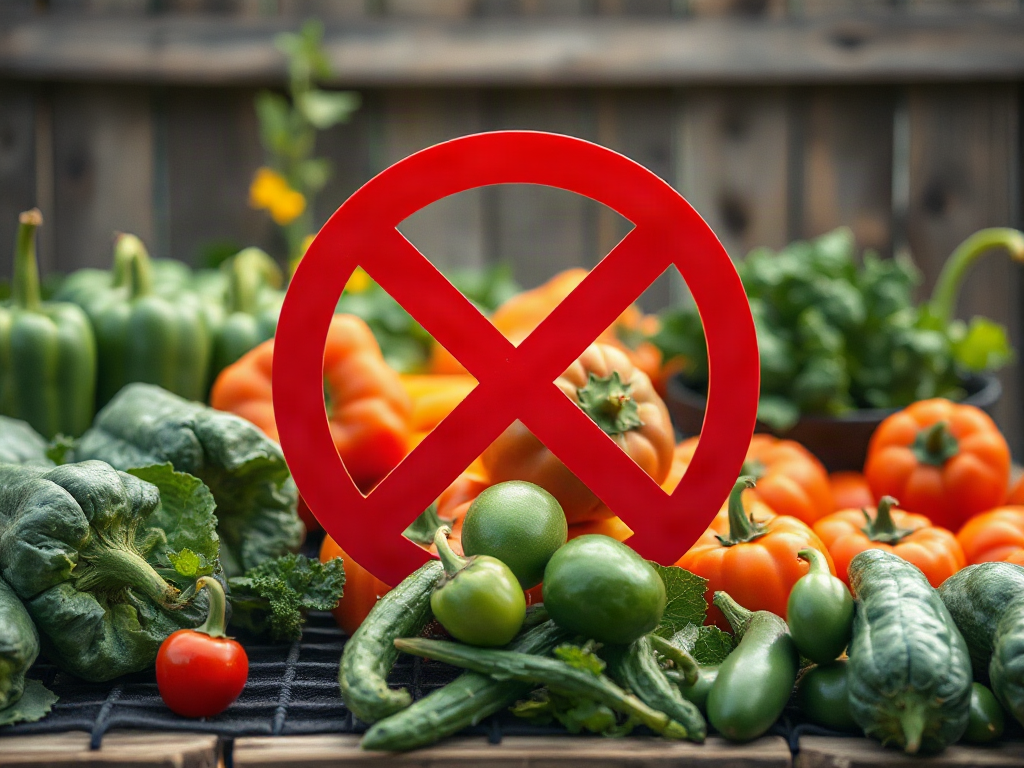
Quick Answer: No vegetable is universally forbidden in a raised bed, but pumpkins, large winter squash, melons, sweet corn, and other space-hungry crops are often inefficient choices. Aggressive plants such as horseradish and Jerusalem artichokes, long-term perennials such as asparagus, and deep roots in shallow beds are usually better given dedicated space.
Why This Happens: Raised beds have limited soil volume, moisture, and growing area, so vigorous vines, permanent crowns, and spreading roots can crowd other crops or complicate rotation. Tall plants may also create unwanted shade, while deep-rooted varieties can become stunted when the bed sits over a hard surface.
How To Fix It:
- Measure the bed’s usable soil depth, not just the height of its frame.
- Compare each crop’s mature spread and root depth with the available space.
- Move aggressive or permanent vegetables into dedicated beds or durable containers.
- Place supported tall crops where they will cast the least shade.
Very few vegetables are completely unsuitable for raised beds. The better question is whether a crop uses the bed’s limited soil, water, and sunlight efficiently. Large spreading plants, permanent perennials, aggressive roots, and tall crops that shade their neighbors are often poor choices, especially in a small bed. They can still be grown with enough depth, support, and room, but planting them elsewhere may leave more space for productive crops such as lettuce, carrots, peppers, bush beans, and compact tomatoes.
Large vining crops usually belong outside the bed
Pumpkins, watermelons, muskmelons, and sprawling winter squash are among the least efficient vegetables to grow entirely within a raised bed. A single mature plant can send vines several feet across paths, nearby beds, or lawns. Its broad leaves may cover smaller vegetables, while the heavy fruit needs stable support if vines are trained upward.
These crops also develop substantial root systems and consume considerable water during hot weather and fruit development. In a confined bed, they can compete with neighboring plants and make it difficult to reach the center for watering, weeding, and harvesting. Large pumpkins are especially awkward because their vines and fruit can overwhelm a narrow bed.
If you want to grow a vining crop, place it at an outer corner and direct the vines over the side onto open ground. A strong trellis can support cucumbers and smaller-fruited squash or melons, although individual fruits may need slings. Avoid relying on a light decorative trellis for heavy squash. Compact or bush cultivars are a better match for raised beds than full-size trailing varieties.
Space-hungry vegetables may give a poor return
Sweet corn is possible in a raised bed, but it is often an inefficient choice. Corn is wind-pollinated and generally performs better when planted in a block rather than as one short row. A useful block occupies much of a small bed, and tall stalks can cast shade over other crops. Corn also needs steady moisture and adequate fertility while growing rapidly.
Large indeterminate tomatoes can create similar crowding problems. They are not prohibited, and raised beds often provide the loose, well-drained soil tomatoes need. However, an unsupported plant may spread across several square feet, smother shorter crops, and restrict air movement. If bed space is limited, use a sturdy cage or trellis, prune only as appropriate for the cultivar, and position tall tomatoes on the side that causes the least shade.
Brussels sprouts and large heading cabbages also occupy the bed for a long period while requiring generous spacing. Potatoes grow well in loose raised-bed soil, but a sizable crop can consume an entire bed. None of these vegetables is inherently wrong for raised beds; they simply offer less harvest diversity per square foot than repeated plantings of greens, radishes, bush beans, beets, or carrots.
Permanent and aggressive plants need careful placement
Asparagus, globe artichokes in climates where they survive as perennials, and rhubarb remain in place for years. Their crowns and roots expand, so they do not fit well in a bed intended for seasonal crop rotation. Asparagus is particularly inconvenient in a mixed annual bed because the mature foliage occupies considerable space after the harvest period. Rhubarb also forms a broad clump that can shade nearby seedlings.
These perennial edibles are better placed in a dedicated bed where the soil will not be disturbed each season. A dedicated raised bed can work well, provided its location, dimensions, and construction are suitable for long-term use. Do not put permanent crops into aging wooden beds that may need to be rebuilt soon, because moving established crowns can be difficult.
Jerusalem artichokes, also called sunchokes, and horseradish warrant additional caution. Both can regrow from root or tuber pieces left in the soil. Harvesting may spread small pieces through the bed, after which unwanted plants can return among later crops. Grow them in a separate, controlled area or a large durable container rather than a mixed raised bed. A raised border alone does not guarantee containment if roots can grow beneath it or harvested pieces are moved with soil.
Match root crops to the actual soil depth
Long carrots, parsnips, daikon radishes, and other deep-rooted vegetables should not be planted in a shallow bed sitting over pavement, compacted subsoil, or another hard barrier. Roots may fork, bend, or stop when they reach the bottom. The visible height of the frame does not always equal usable rooting depth; soil may settle, and a weed barrier or compacted layer can reduce the available space.
This does not mean all root vegetables are poor raised-bed crops. In fact, loose soil with few stones can produce straight, easy-to-harvest roots. Measure the usable depth before selecting a cultivar. Short, round, or half-long carrots fit shallower beds, while long storage carrots and parsnips need more room. Radishes, beets, turnips, and many onions generally require less depth than long-rooted varieties.
Potatoes need enough soil volume for tubers and room for harvest. Digging them from a crowded mixed bed can disturb neighboring roots, so they are often easier to manage in a dedicated section or large container. Sweet potatoes produce vigorous vines and need a warm, relatively long season; they can spill over the sides, but their spreading growth may obstruct paths. Choose them only when both the bed and surrounding area can accommodate the vines.
Avoid combinations that create shade and maintenance problems
Crop placement matters as much as crop choice. Pole beans, trellised cucumbers, corn, okra, and tall tomatoes can shade low-growing vegetables. In the Northern Hemisphere, tall crops are commonly placed toward the north side of a bed to reduce shading, but the best position depends on the bed’s orientation, nearby structures, and the seasonal path of the sun. Observe where shadows fall before installing permanent supports.
Do not crowd vegetables merely because raised-bed soil is fertile. Tight spacing can make watering uneven and reduce airflow through dense foliage. Leaves that stay damp or touch heavily may make disease management harder, and hidden fruit can become overripe. Follow cultivar-specific spacing as a starting point, then account for trellises, access, and local humidity.
Crops with sharply different watering needs can also be frustrating in one irrigation zone. Newly sown carrots need a consistently moist surface while established Mediterranean herbs generally prefer less frequent watering. Large fruiting plants may draw moisture quickly from a small bed during warm, windy weather. Grouping crops by water demand makes irrigation simpler and reduces stress.
Access is another practical limit. Do not plant thorny, sprawling, or difficult-to-support crops where they block the only path to the bed. Keep mature plant width in mind, not the size of the transplant at planting time. Beds should remain reachable without stepping on the soil, which can compact the carefully prepared growing area.
How to decide what belongs in your raised bed
Start with the bed’s length, width, usable soil depth, daily sun exposure, and access to water. Then compare those limits with each vegetable’s mature spread, root depth, support requirements, and time in the ground. A vegetable is a poor choice when it monopolizes the bed, cannot root properly, repeatedly escapes its allotted area, or makes other crops difficult to maintain.
Small beds are usually most productive when reserved for compact or vertically trained crops. Leaf lettuce, spinach, radishes, beets, bush beans, peppers, scallions, compact eggplants, and shorter carrot varieties are practical options. Cucumbers, peas, and pole beans can use vertical space if their trellis is secure and positioned to limit shade. Succession planting can then replace an early crop with a warm-season or autumn crop.
If you strongly prefer corn, pumpkins, potatoes, asparagus, or another demanding crop, dedicate suitable space to it rather than forcing it into a crowded mixed planting. Use open ground for sprawling vines, a permanent bed for perennials, or a large container for plants that require containment. The practical conclusion is simple: raised beds can grow nearly any vegetable, but the worst choices are those whose mature size, persistence, or rooting needs exceed the bed you actually have.
Popular Questions
Can pumpkins trail over the side instead of using bed space?
Yes. Plant a pumpkin near an outer corner and guide its vines onto open ground, keeping paths and nearby crops clear. The roots will still use substantial water and soil space inside the bed. Smaller pumpkin cultivars are easier to manage, while very large varieties may overwhelm the planting area even when their vines trail outside it.
Are potatoes suitable for a shallow raised bed?
Potatoes can grow in a raised bed if they have enough loose soil for roots and tubers, but very shallow beds restrict the crop. Harvesting also involves digging that may disturb adjacent vegetables. A dedicated bed section or large container is often more convenient, particularly when the main bed contains closely spaced or long-season plants.
Should asparagus be planted in a mixed vegetable bed?
Asparagus is better in a dedicated bed because it remains in place for many years and develops an extensive crown and root system. Its tall summer foliage can occupy and shade a large area after spear harvest ends. A permanent raised bed is suitable, but it should be sound, deep enough, and reserved for asparagus rather than rotated annually.
Do carrots grow well in raised beds?
Carrots often perform very well because raised-bed soil can be loose and relatively free of stones. The cultivar must match the usable soil depth, however. Choose short or round carrots for shallow beds over hard surfaces, and reserve long varieties for deeper soil. Avoid compacted layers and fresh, undecomposed organic material that can interfere with straight root growth.