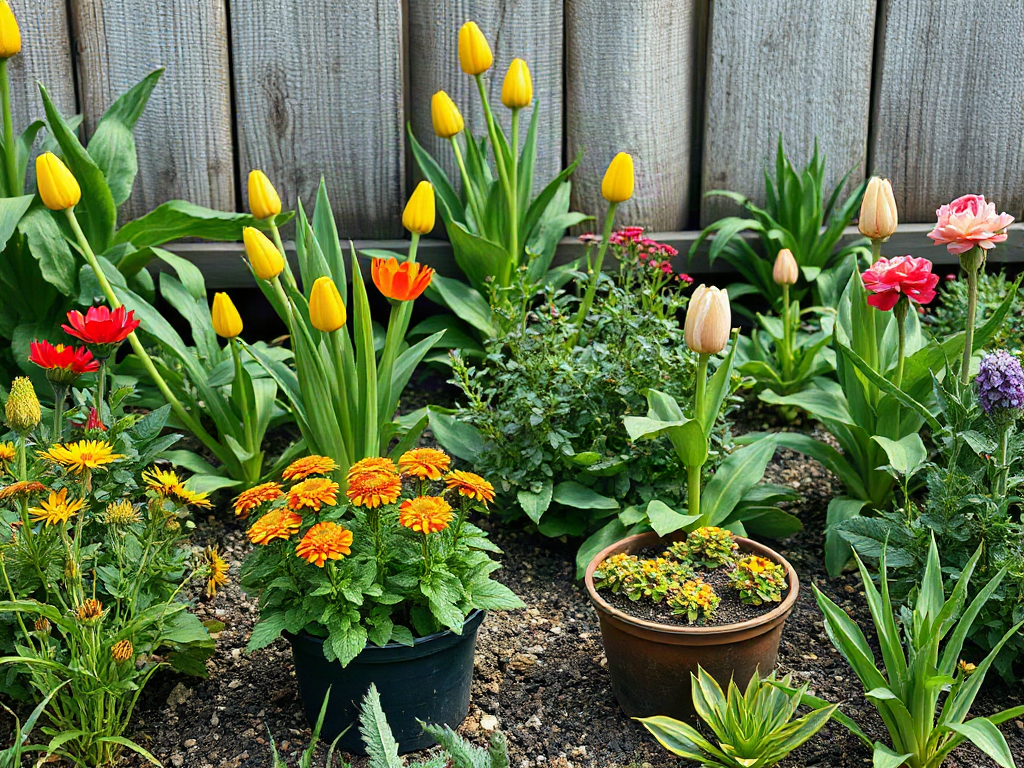
Quick Answer: The 70/30 rule usually means making about 70% of a garden’s plants locally native and keeping non-native, non-invasive plants to roughly 30%. It is a flexible ecological guideline—not an organic certification rule—and can be estimated by plant count, planted area or vegetation layers.
Why This Happens: Native plants receive the larger share because they generally have stronger relationships with local insects, birds and other wildlife. The remaining portion leaves room for vegetables, herbs, fruit and favorite ornamentals, while the overall native majority supports a more connected garden ecosystem.
How To Fix It:
- Inventory existing trees, shrubs, perennials and ground covers, marking each as locally native, non-native, invasive or uncertain.
- Check regional native-plant and invasive-species lists rather than relying only on national origin or nursery labels.
- Remove confirmed invasive plants first, then fill open spaces with diverse natives suited to the site’s light, soil and moisture.
- Replace healthy non-invasive plants gradually instead of clearing the garden solely to reach an exact percentage.
- Reassess each vegetation layer annually and prioritize ecological function over perfect arithmetic.
The 70/30 rule in gardening usually means planting about 70% locally native plants and no more than 30% non-native plants. It is a practical guideline for creating a garden that supports insects, birds, soil life and other local wildlife while leaving room for favorite ornamental or food plants from elsewhere. It is not a universal organic standard, legal requirement or exact formula. Gardeners also use “70/30” for a few design and maintenance ratios, so the intended meaning should always be checked. In ecological and wildlife-friendly gardening, however, the native-to-non-native interpretation is the most useful starting point.
What the 70/30 ratio means in practice
Under the ecological version of the rule, roughly seven out of every ten plants—or about 70% of the planted area—would consist of species native to the garden’s region. The remaining three out of ten plants could be non-native vegetables, herbs, fruit crops and ornamentals. A garden does not have to be measured plant by plant. The ratio is better treated as a planning target that encourages native plants to form the garden’s main biological framework.
For example, a mixed border might contain native shrubs, grasses and flowering perennials as its permanent structure, with a few non-native roses, culinary herbs or annual flowers added for personal use and seasonal interest. In a vegetable garden, the productive beds may contain crops originating from many parts of the world, while native hedges, border flowers and ground covers occupy surrounding spaces. Both arrangements follow the spirit of the rule without requiring every square foot to fit a rigid calculation.
“Native” should refer to plants that evolved in the local region, not merely plants that grow somewhere within the same country. Climate, soil, rainfall and relationships with local insects vary significantly across wide geographic areas. A plant native to a distant desert or coastal zone may offer fewer ecological benefits in an inland woodland region. Regional native-plant organizations, public gardens and local extension services can help identify suitable species.
Why native plants receive the larger share
Native plants are closely connected to the organisms that share their home range. Their foliage, flowers, seeds and stems may provide food or shelter for local insects and birds. Some insects can feed on many kinds of plants, but others depend on a limited group of plant families or species. Increasing the amount and variety of native vegetation therefore gives the local food web a stronger base.
A native-majority garden can also make organic gardening easier. A plant suited to the site’s moisture, sunlight and soil is often less dependent on repeated intervention than a poorly matched plant. That does not mean every native plant is automatically drought-proof, pest-free or easy to grow. A moisture-loving native placed in dry, exposed soil will still struggle. The benefit comes from matching both regional origin and natural growing conditions to the actual site.
The rule also shifts attention away from simply replacing a synthetic product with a natural one. Organic gardening is a broader approach involving soil health, plant diversity, prevention and restrained use of treatments. This explanation of what organic growing means provides useful context for that whole-system view. A diverse, well-matched planting can reduce problems before any pesticide—organic or otherwise—is considered.
How to calculate 70/30 without overcomplicating it
There is no single required method. Counting individual plants is simple in a small new bed, but it can be misleading when one large tree has far more ecological value and physical presence than several tiny annuals. Measuring planted area or estimating vegetation volume may better reflect an established landscape. The best method is the one that leads to more useful native habitat without turning gardening into an accounting exercise.
Use a simple inventory
List the trees, shrubs, perennials, grasses and ground covers currently growing in the garden. Mark each as locally native, non-native or uncertain. Invasive plants should be listed separately rather than treated as an acceptable part of the 30%, because their ability to spread can damage nearby habitats. For clumping perennials, count each clump as one unit; for ground covers, estimate the area occupied. The result only needs to reveal whether native plants are the foundation, a small minority or somewhere between.
Suppose a bed contains ten similarly sized shrubs and perennials. If four are native, replacing three failing or unwanted non-native plants with appropriate natives would bring the bed to seven native and three non-native plants. In a larger yard, work by layers instead: assess the canopy trees, understory shrubs, herbaceous plants and ground layer. Try to establish substantial native representation in each layer rather than reaching 70% through dozens of small plants beneath an otherwise non-native landscape.
Improve the ratio gradually
There is rarely a reason to remove healthy, well-behaved plants merely to achieve a number immediately. Start by removing confirmed invasive species, filling empty spaces with natives and choosing native replacements when short-lived or unhealthy plants decline. This gradual approach costs less, protects existing cover and allows time to observe which plants thrive. Anyone still planning beds, paths and maintenance needs can use a broader beginner garden plan before buying plants.
What belongs in the remaining 30%
The non-native portion gives gardeners flexibility. It may include tomatoes, peppers, basil, apples and other food crops, as well as cherished ornamentals that are not invasive. These plants can have practical or aesthetic value, and some provide pollen, nectar or shelter. The 70/30 guideline does not imply that every non-native plant is harmful. It recognizes that plant origin is one important consideration alongside function, behavior and site suitability.
Choose the 30% carefully. Avoid species identified as invasive in the local region, including plants that spread into natural areas through seeds, runners or discarded garden material. A well-mannered non-native plant that remains where it is planted is fundamentally different from one that escapes cultivation and displaces local vegetation. Regional invasive-species lists are more reliable than a plant label that merely describes a variety as “vigorous.”
It is also sensible to reserve some space for crops and flowers that serve clear household goals. Organic vegetables do not become irrelevant simply because many common crops are non-native. They can be integrated with native flowering borders, hedges and undisturbed habitat. Questions about the value of the resulting harvest are separate from landscape ecology; this discussion of whether organic food is better explains those distinctions.
Limits and other meanings of the rule
The 70/30 rule is a rule of thumb, not a threshold at which a garden suddenly becomes sustainable. A garden with 65% well-chosen native species, multiple vegetation layers and no invasive plants may function better than one that technically reaches 70% with a single native species. Diversity matters because different plants flower, fruit and provide shelter at different times. Plant health and ecological function matter more than mathematical precision.
Nurseries, designers and gardeners may use the same phrase differently. In ornamental design, someone might recommend a 70/30 balance between structural and seasonal planting, foliage and flowers, or restrained and contrasting colors. In planning discussions, it can also describe how space is divided between planting and hard surfaces. These are design conventions rather than definitions of organic gardening. When a label, designer or social-media post mentions the rule, ask what the two percentages represent before applying it.
The native-plant ratio also does not replace core organic practices. Gardeners still need to protect soil, compost suitable materials, minimize disturbance, conserve water, rotate annual crops where practical and monitor pests before treating them. Native plants can suffer when they are installed too deeply, watered incorrectly or placed in unsuitable light. Conversely, a responsibly managed non-native vegetable bed can contribute food, flowers and compostable material within a largely native landscape.
Applying the rule to different gardens
In a suburban yard, native trees and shrubs can provide the main structure, while native perennials and grasses connect them at ground level. The non-native share might consist of a vegetable plot, a few fruit bushes and favorite ornamentals. In a small courtyard, one native shrub, several native perennials and a container of herbs may be a realistic interpretation. Container gardeners can count pots, but grouping compatible native plants in larger containers may create more useful habitat than scattering isolated specimens.
Renters and gardeners with limited control can work at a smaller scale. Replace plants only where permission allows, grow regionally appropriate species in containers and avoid purchasing invasive ornamentals. Even if 70% is unattainable, moving from almost no native vegetation to several diverse native plants is worthwhile. The guideline should support better decisions rather than create an all-or-nothing test.
Begin with an inventory, verify which plants are locally native and identify invasive species. Then add plants that fit the garden’s real sunlight, drainage, soil and available space. Aim for native plants to become the enduring framework while keeping a thoughtful minority of useful, non-invasive plants from elsewhere. That is the practical value of the 70/30 rule: a clear direction for building a more locally connected garden without demanding purity or perfect arithmetic.
Popular Questions
Do vegetables count as non-native plants?
Many familiar vegetables originated outside the region where they are now grown, so they generally fall within the non-native portion of an ecological 70/30 plan. That does not make them undesirable. Keep productive beds, then use native trees, shrubs, flowers, grasses or border plants elsewhere to create the garden’s native majority.
Should healthy non-native plants be removed to reach the target?
Usually not, provided they are non-invasive, healthy and useful. A gradual transition is less disruptive and more affordable. Remove confirmed invasive species first, add natives to empty areas and select locally native replacements as other plants decline. The ratio is a planning direction, not a reason to discard every established ornamental.
How should native plants be counted in a small garden?
Count plants if they are similar in size, or estimate the area occupied when ground covers and large shrubs make a simple count misleading. Containers can be counted individually. Precision is unnecessary; the goal is to determine whether native plants form the main structure and provide varied flowers, foliage, seeds and shelter.
Does a 70% native garden automatically qualify as organic?
No. The ratio addresses plant origin and ecological support, whereas organic gardening also concerns soil care, fertilizers, pest management and cultivation methods. A native-majority garden can still be managed poorly or treated heavily. Combine suitable native plants with composting, water conservation, preventive pest management and minimal soil disturbance.