At a Glance
Chimney flashing fails where separate building materials must remain watertight while moving at different rates. Masonry, metal, shingles, and the wooden roof deck expand and contract with temperature and moisture changes. Proper flashing accommodates that movement while directing water onto the roof covering. A rigid patch of roofing cement may hide a gap temporarily, but it cannot reproduce this layered drainage path.
What you’ll learn
- Why Chimney Flashing Starts Leaking: Chimney flashing fails where separate building materials must remain watertight while moving at different rates. Masonry, metal, shingles, and the wooden roof deck expand and contract with temperature and moisture changes. Proper flashing accommodates that movement while directing…
- Warning Signs and Leak Patterns: The timing and location of moisture provide better clues than the ceiling stain alone. Leakage that appears mainly during wind-driven rain may involve an exposed side joint or lifted counterflashing. Moisture after prolonged rain can point to slow…
- How to Inspect the Chimney Perimeter: A safe inspection begins from the ground, an accessible window, or the attic rather than with an unsupported climb onto a wet or steep roof. Binoculars and a camera with zoom can reveal displaced metal, cracked sealant, debris…
Considering general roof repair in Dandridge? Omega Roofing provides General roof repair in this approved service area.
Your service and local coverage
Omega Roofing offers General roof repair. Contact Omega Roofing to discuss the work required at your property and request an estimate.
Client-approved roofing materials and systems: Asphalt shingles, Architectural shingles, Three-tab shingles, Metal roofing, Standing-seam metal, Corrugated or exposed-fastener metal, Flat or low-slope systems, TPO membrane, Roof coatings, Slate, Synthetic or specialty roofing. Discuss suitability and the requested scope with the business.
Service limitations: Travel radius supplied by client: 50 miles.
Cross-state service: No.
Helpful information for planning the work
Why Chimney Flashing Starts Leaking
Chimney flashing fails where separate building materials must remain watertight while moving at different rates. Masonry, metal, shingles, and the wooden roof deck expand and contract with temperature and moisture changes. Proper flashing accommodates that movement while directing water onto the roof covering. A rigid patch of roofing cement may hide a gap temporarily, but it cannot reproduce this layered drainage path.
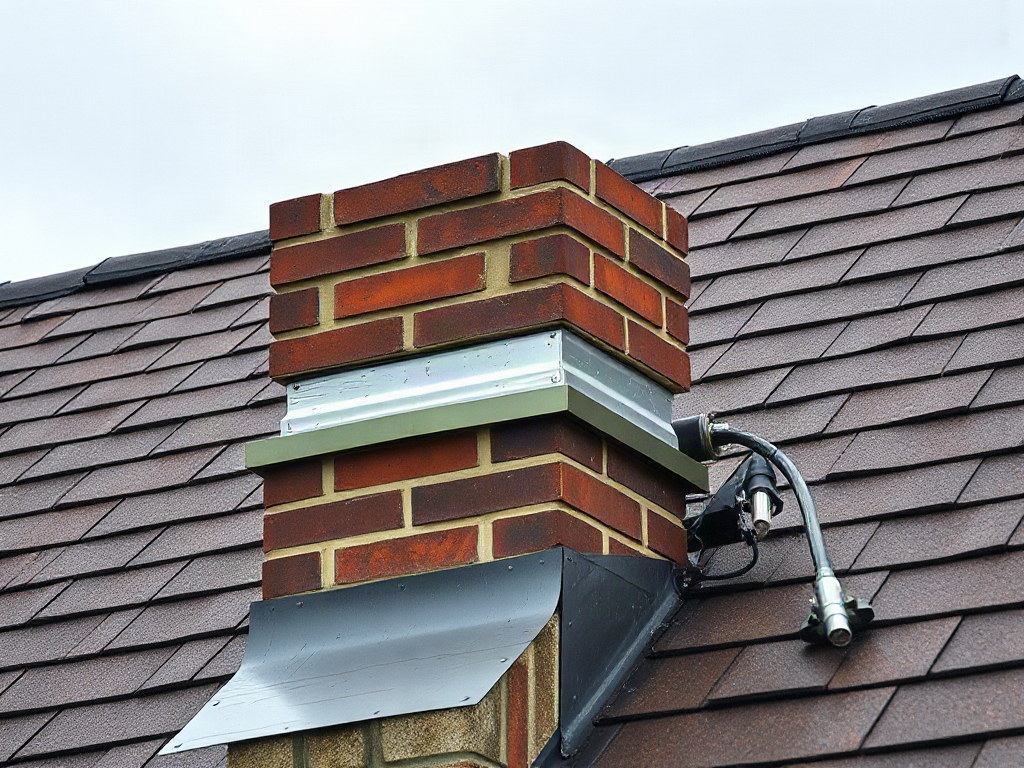
Most masonry chimneys use step flashing along the sloped sides, apron flashing at the downhill face, and head flashing or a cricket on the uphill side. Counterflashing overlaps the upper edges of those pieces and is secured into a masonry joint or another appropriate detail. Leaks develop when metal corrodes, fasteners loosen, counterflashing pulls away, or previous work leaves an exposed seam facing uphill.
The uphill side deserves special attention because it collects runoff, leaves, ice, and wind-driven rain. A wide chimney may need a cricket—a small peaked structure that divides water around the masonry—instead of allowing water to pool behind it. Requirements vary with roof design and applicable building codes, so the absence of a cricket is not automatically proof of defective work. Persistent debris or standing water behind the chimney, however, signals a drainage problem worth correcting.
Warning Signs and Leak Patterns
The timing and location of moisture provide better clues than the ceiling stain alone. Leakage that appears mainly during wind-driven rain may involve an exposed side joint or lifted counterflashing. Moisture after prolonged rain can point to slow entry behind the uphill flashing. A stain that grows during every storm may indicate a larger opening, saturated sheathing, or more than one defect.
Visible exterior warning signs include rust perforation, bent apron corners, missing step-flashing pieces, open mortar joints, sealant that has split away from metal, and shingles nailed through exposed flashing channels. Inside the attic, look for darkened sheathing, rusty nail tips, damp insulation, or water tracks on rafters near the chimney. Dry staining shows that water entered previously; it does not confirm that the leak remains active.
Do not assume that every stain beside a chimney comes from its roof flashing. A cracked chimney crown, deteriorated mortar, damaged cap, or condensation within a flue system may produce similar symptoms. Water can also enter higher on the roof and follow framing until it reaches the chimney opening. The useful test is correlation: inspect during or immediately after rain, trace wet material upward, and compare the path with exterior defects without opening or disturbing a venting system.
How to Inspect the Chimney Perimeter
A safe inspection begins from the ground, an accessible window, or the attic rather than with an unsupported climb onto a wet or steep roof. Binoculars and a camera with zoom can reveal displaced metal, cracked sealant, debris buildup, and damaged shingles. A qualified roofer is the safer choice when the chimney cannot be viewed without walking near an edge or when the roof surface is fragile.
Use a perimeter sequence so no transition is missed:
- Check the uphill face: Look for trapped debris, an open top edge, ponding marks, or damage to the cricket.
- Follow both sidewalls: Confirm that each step-flashing course overlaps the one below and remains covered by shingles and counterflashing.
- Inspect the downhill apron: Watch for lifted corners, punctures, corrosion, or an apron that is too short to shed water cleanly.
- Examine masonry joints: Note loose counterflashing, crumbling mortar, and sealant used as the only barrier.
- Compare with the attic: Map damp sheathing or water tracks to the corresponding exterior face.
A garden-hose test can mislead if too much area is soaked at once, and careless spraying may push water beneath otherwise functional overlaps. When a controlled test is appropriate, a professional can wet one lower section at a time, allow enough observation time, and progress uphill. Stop if water approaches electrical wiring, ceilings are bulging, or the source cannot be monitored safely.
Read the full guide: Flashing Damage Around Chimneys and Roof Leaks: Warning Signs
Discuss your property and next steps
Omega Roofing — Omega Roofing offers the client-selected services within the approved service areas listed in this profile.
Local questions
Does Omega Roofing offer General roof repair in Dandridge?
Yes. This service and city are included in the business’s approved coverage.
How can I discuss an estimate?
Use the estimate link above or call 865-257-7887. Share your address and the work you need. The team can confirm the service scope and next steps for your property.
Business-supplied service information
Services and coverage were supplied by Omega Roofing. Contact the business to confirm the scope and availability for your property.