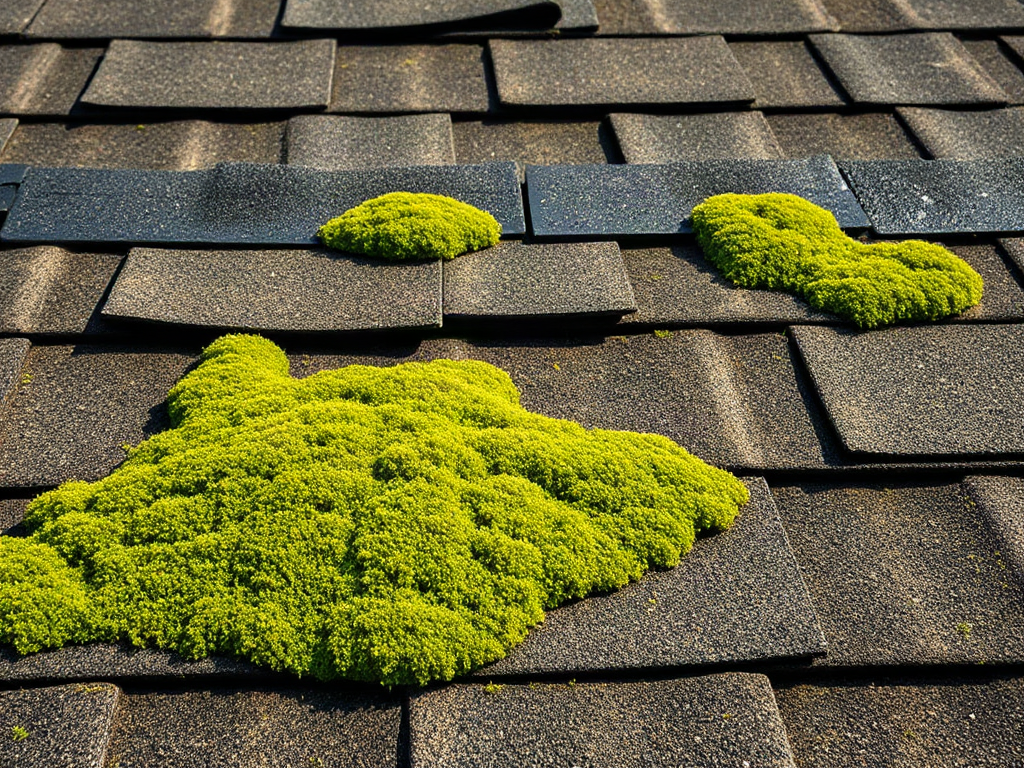
Moss growing under roof shingles can lift shingle edges, hold moisture against the roof, and accelerate wear around vulnerable seams and fasteners. The greatest concern is not the green surface growth itself but established moss extending beneath tabs where water can follow damaged or displaced roofing materials. Check for raised tabs, brittle shingles, exposed underlayment, soft decking, and damp attic sheathing before deciding how to respond. Remove growth gently without pressure washing or aggressive scraping, correct shade and drainage conditions, and have a roofing professional assess areas where shingles no longer lie flat or the deck shows moisture damage.
What you’ll learn
This guide covers the following practical points:
- Why Moss Spreads Beneath Shingles — Moss becomes established where roof surfaces remain damp long enough for spores to grow, especially on shaded slopes beneath trees or on areas with slow drainage.
- Signs Moss Has Damaged the Roof — Damage is more likely when shingle tabs remain raised after the moss is removed or when roofing material cracks under light handling.
- Safe Removal and Repair Decisions — Gentle treatment protects shingles better than forceful cleaning.
- Keeping Moss From Returning — Prevention depends on faster drying and cleaner water paths rather than repeated harsh treatment.
Why Moss Spreads Beneath Shingles
Moss becomes established where roof surfaces remain damp long enough for spores to grow, especially on shaded slopes beneath trees or on areas with slow drainage. Asphalt-shingle granules, airborne debris, and decaying leaves can create a moisture-holding layer in the spaces between tabs. North-facing slopes often dry more slowly, but nearby branches, valleys, clogged gutters, and roof geometry may make any section susceptible.
Young growth commonly appears as a thin green film on the exposed surface. As the moss thickens, its stems and rootlike anchoring structures occupy joints and lower shingle edges. The growth absorbs water and expands, which may gradually raise tabs that were designed to remain flat. Wind-driven rain can then reach farther beneath the shingle course than it would on an intact roof.
Moss does not consume asphalt shingles like a wood-decay organism, but the conditions supporting it can shorten roofing life. Persistent moisture may loosen protective granules, stress seal strips, and keep nail locations or sheathing damp after rainfall. Freeze-thaw cycles can add movement where wet moss has already lifted an edge. A common mistake is assuming that visible greenery proves an active leak; it signals elevated risk, but the condition of the shingles, underlayment, flashing, and deck determines whether water has entered the structure.
Signs Moss Has Damaged the Roof
Damage is more likely when shingle tabs remain raised after the moss is removed or when roofing material cracks under light handling. From the ground, look for irregular shingle lines, thick clumps emerging from joints, missing granules, dark runoff paths, or displaced pieces near heavily covered areas. Binoculars can provide a closer view without the fall risk of walking on a damp, mossy slope.
The attic can reveal consequences that are not obvious outside. During or shortly after rain, inspect accessible areas for darkened sheathing, damp insulation, water tracks around nails, or staining below the affected slope. Older stains are not proof of a current leak, so compare their location with the moss-covered area and check whether the material feels damp. Sagging or soft roof decking warrants prompt professional evaluation because surface cleaning will not restore structural strength.
Use the following order to separate cosmetic growth from probable roofing failure:
- Map the growth: Identify whether moss is limited to exposed surfaces or packed beneath tabs and flashing edges.
- Check shingle position: Raised, curled, torn, or missing tabs indicate more than discoloration.
- Inspect below: Look in the attic for moisture, damaged sheathing, or wet insulation beneath the same slope.
- Consider roof age and brittleness: An older covering may be damaged by handling even if the moss appears removable.
Do not pry up shingles simply to inspect beneath them. Factory seal strips may tear, and brittle tabs may crack. A roofer can lift only what is necessary and determine whether localized replacement, underlayment work, or a broader reroofing decision is justified.
Safe Removal and Repair Decisions
Gentle treatment protects shingles better than forceful cleaning. Pressure washing can strip granules and drive water beneath laps, while stiff wire brushes and aggressive scraping can tear the asphalt surface. Walking on moss is also hazardous because wet growth is slippery and may conceal weak decking or loose material. For steep, high, fragile, or extensively covered roofs, professional service is the safer choice.
Where access and roof condition permit safe work, a roof-compatible moss treatment may be applied according to its label, followed by time for the dead growth to release. Products must be chosen with the roofing material, metal components, gutters, landscaping, and runoff in mind. Mixing household chemicals or assuming that a stronger concentration works faster can discolor materials, damage plants, and expose the user to unnecessary risk.
Removal should not be confused with repair. If a small affected area has sound decking and only a few damaged tabs, replacing those shingles may be reasonable. Widespread lifted courses, recurring leaks, brittle shingles, deteriorated underlayment, or soft sheathing can make isolated patching poor value. For example, cleaning a thick moss mat from an aging slope may expose cracked tabs that were previously hidden; sealing those cracks from above does not correct compromised material below.
A successful response leaves the shingle courses flat, drainage paths open, and the attic dry through later rainfall. Continued lifting, fresh staining, musty insulation, or repeated growth in the same joints indicates that cleaning alone did not resolve the underlying condition.
Keeping Moss From Returning
Prevention depends on faster drying and cleaner water paths rather than repeated harsh treatment. Trim branches where appropriate to improve sunlight and airflow while preserving safe clearance from the roof. Keep gutters, valleys, and roof-to-wall transitions free of leaves and needles so water does not remain beside shingle edges. Tree work close to a roof should be handled carefully to avoid dropped limbs and damaged roofing.
Inspect shaded slopes after leaf fall and during routine roof checks. Early, thin growth is easier to address than mature clumps embedded between courses. Photographs taken from the same safe ground location can show whether patches are spreading, whether tabs are changing position, and whether runoff is leaving persistent streaks.
Metal moss-control strips are sometimes installed near the ridge so rainfall carries small amounts of metal ions down the roof. Their performance depends on placement, roof shape, rainfall, and the amount of surface they can reach; they do not repair existing damage or replace cleaning. Poor installation can also create new fastener penetrations. Treat such strips as one possible maintenance measure, not a guaranteed cure.
The most common prevention failure is treating only the visible growth while leaving dense shade, trapped debris, or faulty drainage unchanged. Correcting those site conditions reduces the damp periods that allow moss to return and makes later inspections more meaningful.
Frequently Asked Questions
Can moss under shingles cause a roof leak?
It can contribute to leaks by lifting tabs and retaining moisture, but moss alone does not prove water has entered. Check the attic, decking, flashing, and affected shingle courses for direct evidence.
Should moss be scraped off roof shingles?
Aggressive scraping is not recommended because it can remove granules, break brittle tabs, and disturb seal strips. Use a roof-compatible treatment or hire a qualified service for unsafe or extensive growth.
Can pressure washing remove roof moss safely?
Pressure washing can damage asphalt shingles and force water beneath their laps. Lower-impact treatment and controlled removal are generally more appropriate for this roofing material.
Does a mossy roof need to be replaced?
Not automatically. Replacement becomes more likely when moss accompanies widespread lifting, brittle or missing shingles, failed underlayment, recurring leaks, or soft roof decking.
How can moss growth be monitored without climbing onto the roof?
Use ground-level photographs or binoculars to track patch size, shingle alignment, and debris buildup. Inspect the attic after rain, and arrange a professional roof inspection if damage is suspected.
Conclusion
Thick moss beneath shingle edges deserves attention because cleaning may uncover displaced or deteriorated roofing rather than solve the whole problem. Start with a safe ground and attic inspection, then distinguish surface growth from lifted tabs, moisture entry, or deck damage. Choose gentle removal for sound roofing and professional assessment when access is risky, shingles are brittle, or dampness appears below. Improving sunlight, airflow, and drainage will make any repair more durable.