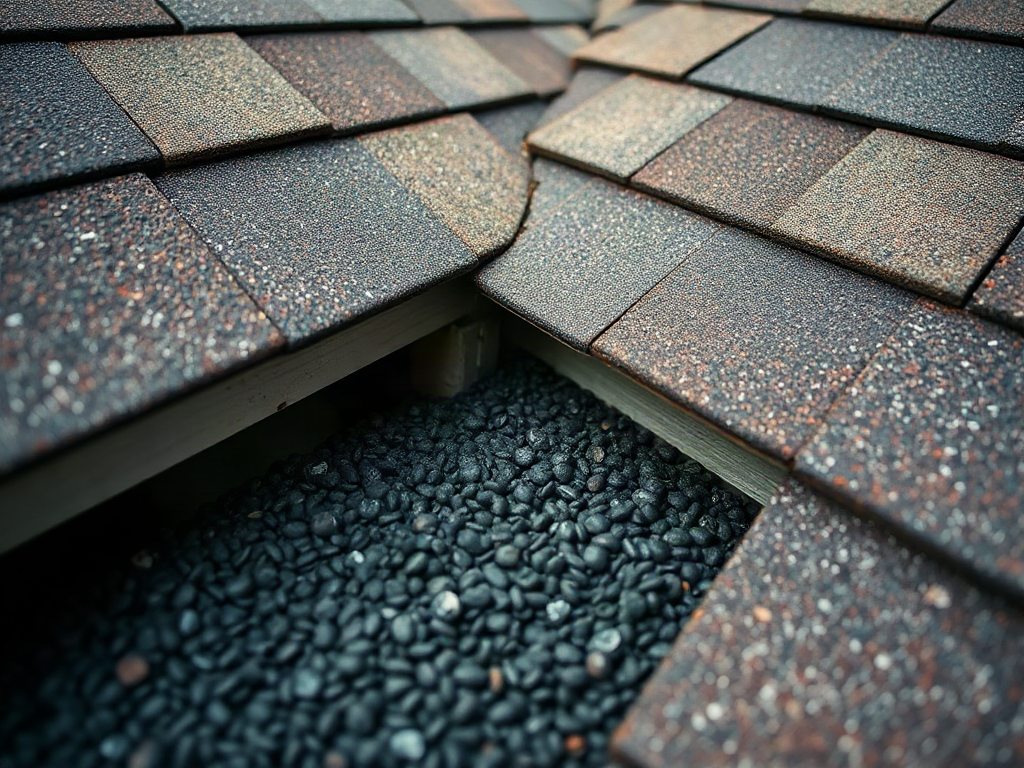
Granule loss in gutters warrants roof replacement when asphalt shingles show widespread bare patches, exposed fiberglass mats, cracking, or declining water resistance rather than light, isolated shedding. Loose granules commonly appear after installation, hail, foot traffic, or ordinary aging, so gutter debris alone does not establish failure. Check several roof slopes, especially sun-exposed areas and runoff paths below valleys, for uneven color and visible asphalt. Active leaks, brittle shingles, recurring repairs, and damage across multiple sections strengthen the case for replacement.
What you’ll learn
This guide covers the following practical points:
- Why Roofing Granules Reach the Gutters — Asphalt-shingle granules protect the underlying asphalt from sunlight and give the finished surface its color.
- Signs Granule Loss Is Serious — Serious deterioration changes the appearance or integrity of the shingle surface across a meaningful part of the roof.
- Choosing Between Repair and Replacement — Repair is most defensible when damage is confined, surrounding shingles remain flexible and well covered, and replacement shingles can be integrated without disturbing fragile material.
- Inspection Checklist After Finding Granules — A repeatable inspection is more useful than reacting to one gutter cleaning.
Why Roofing Granules Reach the Gutters
Asphalt-shingle granules protect the underlying asphalt from sunlight and give the finished surface its color. Rainwater carries granules that have detached from the shingles into downspouts and gutter troughs, where their weight makes them easy to notice. A small quantity can be normal, particularly on a recently installed roof because surplus granules may remain after manufacturing and installation.
Age is another common cause. Asphalt gradually becomes less flexible as shingles weather, weakening the bond that holds the mineral surface. Sun-facing slopes may deteriorate sooner than shaded slopes, while valleys and areas below downspouts from upper roof sections receive concentrated water flow. Hail, falling branches, careless pressure washing, and repeated foot traffic can produce more localized loss.
The common mistake is judging severity from the gutter deposit alone. Granules may have accumulated over months, and a large house has more shingle surface feeding its gutters than a small one. The better evidence is on the shingles themselves: uniform color generally suggests the protective layer remains intact, while dark spots, streaks, or exposed reinforcement indicate material has been lost where it matters.
Signs Granule Loss Is Serious
Serious deterioration changes the appearance or integrity of the shingle surface across a meaningful part of the roof. Bare asphalt often appears as dark, irregular patches. More advanced wear may expose the fiberglass mat beneath the asphalt coating. Once the protective surface is broadly depleted, continued weather exposure can accelerate cracking and loss of water-shedding performance.
Distribution helps distinguish a roof-wide aging problem from a repairable event. One damaged patch below a fallen limb may call for replacing a limited group of shingles. Similar bald areas on several slopes, by contrast, suggest that shingles of the same age are reaching the same stage of wear. Check for related conditions such as curled edges, cracks, missing tabs, loose adhesive bonds, soft decking, ceiling stains, or repeated leaks.
| Observed condition | Likely interpretation | Practical response |
|---|---|---|
| Loose granules but consistent shingle color | Possible installation surplus or limited weathering | Document and monitor after cleaning the gutters |
| Localized bald spots after impact | Concentrated physical or storm damage | Request an inspection and evaluate spot repair |
| Widespread dark patches on several slopes | Protective surface is broadly depleted | Obtain a replacement assessment |
| Exposed mat, cracks, leaks, or brittle tabs | Advanced shingle deterioration | Prioritize prompt professional evaluation |
Do not assume every dark mark is granule loss. Algae staining, dirt, moisture, and lighting can alter the roof’s appearance. Close visual examination by someone who can access the surface safely is more reliable than photographs taken from a single ground-level angle.
Choosing Between Repair and Replacement
Repair is most defensible when damage is confined, surrounding shingles remain flexible and well covered, and replacement shingles can be integrated without disturbing fragile material. For example, a small impact zone on an otherwise serviceable slope may be addressed without removing sound roofing elsewhere. The repair must still correct any damaged flashing or underlayment rather than merely cover a visible bald patch.
Replacement becomes more reasonable when deterioration appears across multiple slopes, shingles crack when handled, leaks recur in unrelated places, or previous patches are multiplying. Matching new shingles to an old, weathered field can also be difficult. A repair may stop one leak while leaving neighboring material close to failure, making repeated service calls a poor tradeoff even when each individual repair costs less than replacement.
Roof age provides context but should not decide the issue by itself. Product type, ventilation, slope orientation, installation quality, climate, and storm exposure all influence service life. Likewise, granules in gutters should not be treated as proof of an insurance-covered event; storm-related damage and long-term wear are different findings. Ask the inspector to identify the affected slopes, show close photographs, explain whether the mat is exposed, and separate immediate defects from conditions that can be monitored.
Inspection Checklist After Finding Granules
A repeatable inspection is more useful than reacting to one gutter cleaning. Photograph the granules before disposal, note which gutter runs contain them, and compare those locations with the roof sections draining into them. After the gutters are cleaned, observe whether substantial material returns following ordinary rain or only after severe weather.
- Look from the ground: Use binoculars to check for uneven color, missing shingles, lifted edges, and debris impact without climbing onto the roof.
- Check indoors: Examine attic decking where accessible and inspect ceilings for staining, dampness, or daylight at penetrations.
- Record the pattern: Note whether granules come from one drainage area or gutters around the entire house.
- Arrange safe surface evaluation: Have a qualified roofer assess suspected bald areas, flashing, valleys, penetrations, and shingle flexibility.
- Request a defined scope: Compare a targeted repair estimate with replacement proposals that identify decking allowances, underlayment, ventilation, flashing, and disposal.
A failing approach is brushing or rubbing shingles to test them; that action can dislodge additional granules and create damage. Pressure washing is also unsuitable for diagnosing or correcting the problem. If water is entering the building, temporary leak control deserves priority, but it should be followed by diagnosis of the exterior defect rather than treated as a permanent interior fix.
Frequently Asked Questions
Are granules in gutters normal on a new roof?
A modest amount can be normal because excess granules loosen during shipping, installation, and early rainfall. Persistent heavy shedding or visible bare spots should be inspected.
Can clogged gutters cause shingle granule loss?
Clogged gutters do not usually cause broad surface loss, but poor drainage can keep roof edges wet and contribute to deterioration around the eaves. The blockage and the shingle condition should be evaluated separately.
Does hail always leave bald spots on shingles?
No. Hail effects vary with stone size, wind, shingle condition, and impact angle. Suspected damage may include concentrated granule displacement, dents, bruising, or fractures that require close inspection.
Can lost granules be reapplied to asphalt shingles?
Loose granules cannot be restored as a durable field repair. Coating or gluing them onto worn shingles does not recreate the original manufactured surface or correct deteriorated asphalt and reinforcement.
Should I climb onto the roof to check granule loss?
Ground-level viewing with binoculars is safer for homeowners. Steep, wet, brittle, or damaged roofing presents fall and surface-damage risks, so close assessment is better left to a qualified contractor.
Conclusion
Gutter granules are a prompt to inspect, not an automatic replacement verdict. Clear the gutters, document where deposits occur, and evaluate the corresponding shingles for bald areas, exposed mat, brittleness, and related leaks. Localized damage may remain repairable; broad deterioration across several slopes usually makes replacement the more coherent long-term option. Base the decision on documented surface condition and repair scope rather than granule quantity or age alone.