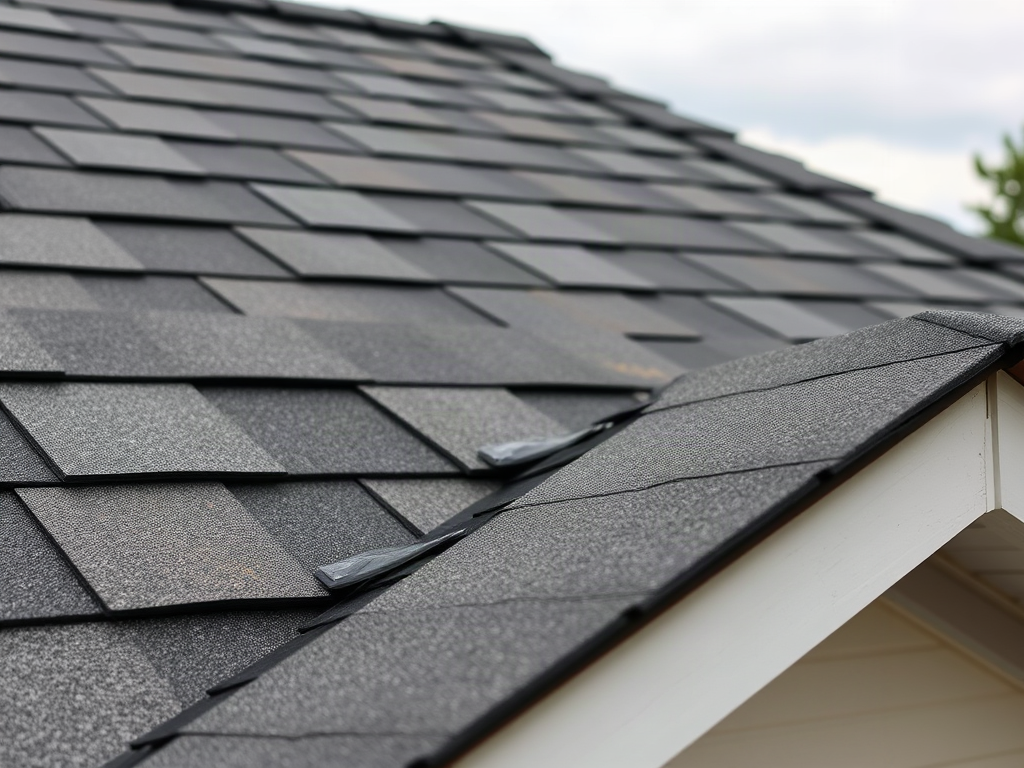
Shingles curling at the edges can sometimes be repaired when the damage is isolated, the shingles remain flexible, and the surrounding roof is sound; widespread curling usually points toward replacement. Common causes include heat and moisture trapped by poor attic ventilation, aging asphalt, installation errors, and repeated wind exposure. A roofer may reseal or replace a few affected shingles, but roofing cement should not be treated as a lasting fix for brittle material. Look for cracked tabs, exposed fasteners, granule loss, leaks, and soft decking before deciding.
What you’ll learn
This guide covers the following practical points:
- Why Shingle Edges Curl — Edge curling occurs when an asphalt shingle no longer lies flat against the course beneath it.
- When Curled Shingles Are Repairable — Localized curling may justify repair when only a few shingles are affected and the surrounding material is still pliable, well bonded, and free of substantial granule loss.
- Signs the Roof Needs Replacement — Widespread curling indicates that individual repairs are unlikely to address the underlying decline.
- Inspection and Next Steps — A useful inspection begins from the ground and inside the attic rather than with an unsupported walk across the roof.
Why Shingle Edges Curl
Edge curling occurs when an asphalt shingle no longer lies flat against the course beneath it. The lifted edge catches wind, sheds water less predictably, and can expose the fastener area or shingle below. Curling is therefore more than a cosmetic defect, although it does not automatically mean the entire covering has failed.
Aging is a common cause. Asphalt shingles gradually lose volatile compounds and become less flexible, while surface granules loosen and the mat contracts. Heat can accelerate that process. If attic heat and moisture are not managed effectively, the underside of the roof deck may remain unusually warm or damp, placing additional stress on the shingle system.
Installation conditions also matter. Shingles can distort when they are fastened too high, placed over an uneven substrate, installed without the specified offset, or applied over an unsuitable existing layer. Wind may then work repeatedly under a raised edge. A frequent mistake is to blame every curled tab on ventilation alone; the pattern and location must be examined. Curling across similarly exposed, older slopes suggests material deterioration, while several lifted tabs near a ridge, edge, or previous repair may indicate localized fastening or wind damage.
When Curled Shingles Are Repairable
Localized curling may justify repair when only a few shingles are affected and the surrounding material is still pliable, well bonded, and free of substantial granule loss. The roof deck beneath the area should also be dry and firm. Repair typically means replacing the affected shingles or, in limited situations, resealing lifted tabs according to the shingle manufacturer’s instructions.
Replacement shingles must match the existing type and dimensions closely enough to maintain correct exposure and water shedding. Color differences are likely on an older surface because weathering changes the appearance of the original material. A visual mismatch is usually less consequential than forcing an incompatible shingle into the course.
Simply pressing a curled edge into a dab of roofing cement can hide deterioration without restoring the shingle’s strength. Excess sealant may also obstruct drainage or create a visible lump. If a tab cracks when gently manipulated, the material is too brittle for dependable resealing and should be replaced rather than flattened.
A small repair is most defensible when all of the following conditions are present:
- The curling is confined to a small, clearly defined area.
- Adjacent shingles remain flat and retain their protective granules.
- No water stains, damp insulation, or softened decking appear below.
- The damage has an identifiable local cause, such as a loose fastener.
- Compatible replacement material is available.
Signs the Roof Needs Replacement
Widespread curling indicates that individual repairs are unlikely to address the underlying decline. When raised edges appear across a slope or on several roof planes, the asphalt covering may have lost enough flexibility that new defects will continue to emerge. Paying for repeated spot work can then postpone, rather than prevent, replacement.
Condition matters more than age alone. A relatively young installation can fail early because of poor attachment, defective decking, chronic moisture, or unsuitable layering. Conversely, an older covering with limited localized damage may still have serviceable areas. The decision should be based on the entire assembly rather than an estimated installation date by itself.
| Observed condition | Likely direction | Reason |
|---|---|---|
| A few flexible, lifted tabs | Targeted repair | Damage may be isolated and replaceable |
| Curling across one or more slopes | Replacement evaluation | Broad material deterioration is likely |
| Brittle tabs with heavy granule loss | Replacement evaluation | Repairs may damage neighboring shingles |
| Leaks or soft roof decking | Prompt professional assessment | The problem may extend beneath the shingles |
| New curling after repeated repairs | Replacement evaluation | Spot work is not controlling the failure pattern |
Missing tabs, open cracks, exposed nail heads, sagging areas, interior water marks, and deteriorated flashing strengthen the case for broader work. Replacement does not necessarily mean every piece of roof decking must be removed, but damaged sheathing must be identified once the covering is opened. The common failure here is budgeting only for visible shingles while ignoring possible deck, flashing, and ventilation corrections.
Inspection and Next Steps
A useful inspection begins from the ground and inside the attic rather than with an unsupported walk across the roof. Binoculars or a camera with zoom can reveal whether curling is concentrated at eaves, ridges, penetrations, or entire slopes. In the attic, look for water staining, damp insulation, rusty fastener tips, daylight at unintended openings, and darkened decking.
Record the affected locations and compare roof planes. For example, severe curling on a sun-exposed slope with flat shingles elsewhere may reflect uneven weathering, while matching deterioration throughout the roof points toward system-wide aging. Check gutters and downspout outlets for accumulations of granules, but do not use a few loose granules as the sole basis for replacement.
Walking on curled or brittle shingles can break tabs and presents a fall hazard, especially on steep, wet, or high surfaces. A qualified roofing contractor can inspect fastening, flashing, underlayment edges, sheathing condition, and attic ventilation without relying only on street-level appearance. For a consequential decision, request photographs and a written scope that separates isolated repairs from replacement work.
Compare proposals by asking each contractor to identify the failure pattern, explain whether the deck can be evaluated before pricing, and state how flashing and ventilation will be handled. A low repair price is not economical if adjacent shingles are too fragile to lift without damage. Conversely, a replacement proposal should be questioned when the defect is limited to several otherwise sound shingles and no underlying failure is evident.
Frequently Asked Questions
Can curled shingles be flattened and reused?
A slightly lifted, flexible tab may sometimes be resealed, but a shingle that stays deformed or cracks under light movement has deteriorated and should be replaced.
Does one curled shingle mean the roof is failing?
No. One curled shingle may result from a loose fastener, wind, or a localized installation defect. Inspect neighboring courses and the area below before judging the whole roof.
Will roofing cement permanently fix a curled edge?
Roofing cement may secure a suitable lifted tab in a limited repair, but it cannot restore brittle asphalt, missing granules, cracked reinforcement, or damaged decking.
Can poor attic ventilation cause shingle curling?
Excess attic heat and moisture may contribute to shingle and deck stress, but curling can also come from age, fastening errors, uneven substrate, or wind exposure.
Should I climb onto the roof to inspect curled shingles?
Ground-level and attic checks are safer first steps. Walking on a steep, wet, brittle, or visibly damaged surface can cause falls and break additional shingles.
Conclusion
Base the repair-or-replace decision on the damage pattern and the condition of the surrounding assembly. Several flexible, isolated shingles may be reasonable repair candidates; broad curling, brittleness, recurring defects, leaks, or compromised decking call for a replacement assessment. Document the pattern from safe locations, check the attic for moisture evidence, and obtain a written evaluation that addresses shingles, flashing, sheathing, and ventilation together.