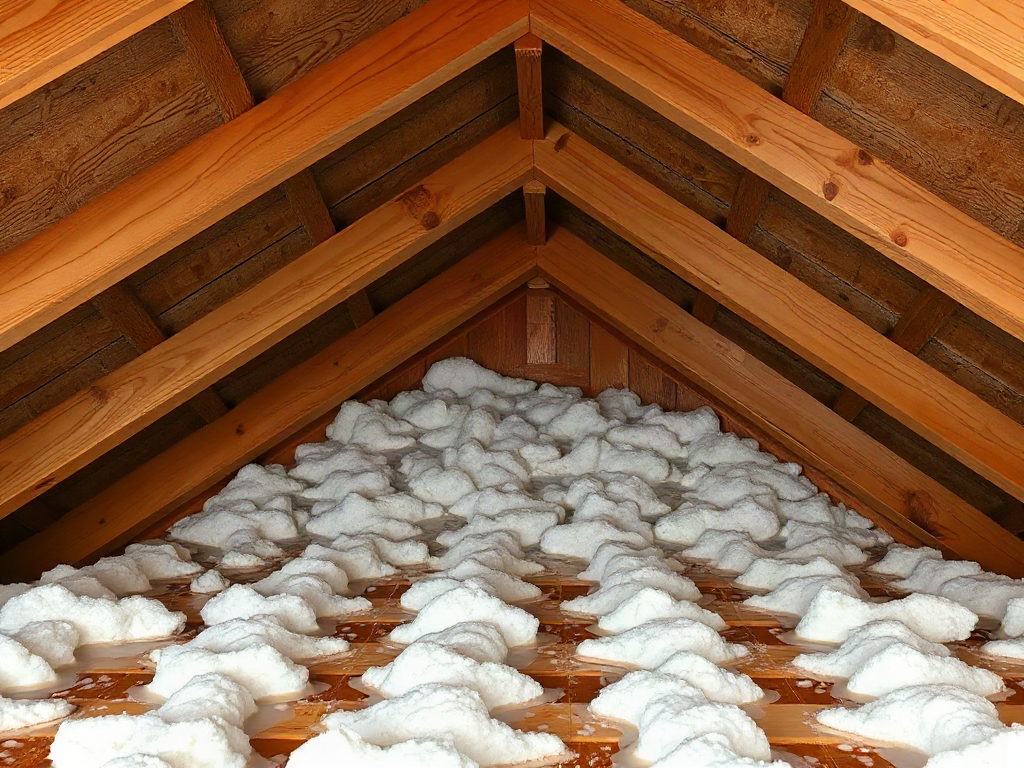
Wet attic insulation beneath a roof leak may be dried and retained only when the water was clean, exposure was limited, and the material regains its original loft without odor or visible growth. Stop the leak before evaluating the insulation, then remove standing water and inspect the roof decking, rafters, ceiling surface, wiring, and fasteners. Saturated cellulose, matted fiberglass, contaminated material, and insulation that remains damp or smells musty are generally better candidates for removal. Drying the surface while leaving moisture trapped against wood can conceal deterioration, so verify both the insulation and surrounding materials before closing the attic.
What you’ll learn
This guide covers the following practical points:
- Control the Leak and Check Immediate Hazards — A wet patch in the attic is evidence of a water path, not necessarily the point where water entered the roofing.
- Decide Whether the Insulation Can Be Dried — Insulation should be judged by water source, saturation, material type, physical condition, and the moisture held by adjacent wood.
- Remove, Dry, and Restore the Attic Correctly — Drying works only when wet material is exposed to moving air and the moisture has a route out of the attic.
- Verify the Repair Before Reinsulating — The attic should remain exposed until both the roof repair and drying result can be checked.
Control the Leak and Check Immediate Hazards
A wet patch in the attic is evidence of a water path, not necessarily the point where water entered the roofing. Water can travel along roof decking, rafters, nails, pipes, or underlayment before dripping into insulation. Mark the wet area and any stains while they are visible, but avoid walking on ceiling drywall or compressing insulation to search for the opening.
The first priority is stopping additional water safely. A roofing contractor may need to trace damaged flashing, a failed roof penetration, displaced covering material, or another exterior defect. A bucket beneath an active drip can limit interior damage, but it is not a repair. Roof work during rain, wind, darkness, or icy conditions creates a serious fall hazard and should not be treated as a do-it-yourself emergency measure.
Electricity changes the response. Keep away from wet wiring, junction boxes, recessed fixtures, ventilation equipment, and electrical panels. If water has reached electrical components, arrange for a qualified electrician to assess them; do not handle damp insulation around energized equipment. A bulging or heavily stained ceiling below should also be treated cautiously because saturated drywall can release water or fail without much warning.
Photograph the leak path, roofing defect, wet insulation, and affected finishes before cleanup if an insurance claim may be considered. The common mistake at this stage is removing every visible clue before anyone has identified the entry route. Preserve enough evidence to diagnose the leak while preventing further spread.
Decide Whether the Insulation Can Be Dried
Insulation should be judged by water source, saturation, material type, physical condition, and the moisture held by adjacent wood. A small amount of clean rainwater on an accessible fiberglass batt presents a different decision from repeated leakage that has soaked loose-fill cellulose and stained the ceiling below.
| Observed condition | Likely action | Reason |
|---|---|---|
| Lightly damp fiberglass with intact loft | Remove temporarily and dry if practical | It may remain usable when clean, odor-free, and fully restored |
| Matted or heavily saturated fiberglass | Replace the affected portion | Compression and trapped debris can reduce performance |
| Wet loose-fill cellulose | Remove the wet and clumped material | It can hold water, settle, and dry unevenly |
| Musty, visibly affected, or dirty-water exposure | Remove and assess surrounding materials | Drying alone does not correct contamination or established growth |
Fiberglass fibers do not absorb water in the same way as cellulose, but a batt can still trap water between fibers, facing, dust, and wood. If it stays flattened after drying, its thermal resistance may not return to its intended level. Faced batts deserve closer attention because kraft or foil layers can slow drying and conceal dampness.
Cellulose commonly compacts and forms dense wet masses. Removing only the visibly dark top layer can leave damp material against ceiling drywall or framing. Mineral wool may tolerate limited clean-water exposure better than absorbent loose fill, but it still needs inspection for contamination, displacement, and trapped moisture.
Do not use appearance alone as the test. Roof sheathing may remain damp after the exposed insulation feels dry. Persistent odor, soft or delaminating decking, darkening that changes over time, recurring condensation, or moisture readings that remain elevated are reasons to extend the investigation and consider a qualified remediation or building professional.
Remove, Dry, and Restore the Attic Correctly
Drying works only when wet material is exposed to moving air and the moisture has a route out of the attic. After the leak is controlled and electrical hazards are addressed, isolate the work area from occupied rooms as practical. Wear suitable gloves, eye protection, and respiratory protection because attic insulation can contain irritating fibers, dust, animal debris, and disturbed particles.
Remove saturated insulation into sturdy bags rather than carrying loose wet material through the house. Keep insulation from blocking soffit vents, and avoid directing powerful fans in ways that scatter fibers or spread suspected microbial growth. A dehumidifier may help in an enclosed, safely accessible attic, but its effectiveness falls when outdoor air freely enters through large vents. Air movement, ventilation conditions, outdoor humidity, and material thickness all affect drying time, so a fixed number of hours is not a reliable clearance test.
A practical cleanup sequence is:
- Stop and document the leak. Confirm the likely entry point before disturbing the entire area.
- Remove standing water and failed insulation. Expose wet decking, framing, and the ceiling surface below.
- Dry the assembly. Use controlled air movement and dehumidification where appropriate without blocking attic ventilation.
- Inspect the exposed materials. Look for softness, separation, staining progression, corrosion, odor, and hidden wet pockets.
- Clean and replace only after verification. Restore insulation depth and keep ventilation channels open.
Spraying fragrance, stain blocker, or a surface treatment onto damp insulation is a poor substitute for removal and drying. Coatings can hide odor or discoloration while moisture remains in the assembly. Likewise, adding fresh insulation over a wet layer traps the problem and makes later inspection harder.
Verify the Repair Before Reinsulating
The attic should remain exposed until both the roof repair and drying result can be checked. A successful repair shows no fresh water tracks during subsequent rain, while the decking, framing, and ceiling material continue drying rather than developing new stains or odor. Where reliable use is possible, a moisture meter provides better comparison than touching one surface, especially when readings are taken at the affected area and nearby dry wood.
Replacement insulation should match the surrounding assembly without covering soffit intake paths, heat-producing fixtures that require clearance, or electrical junction boxes. Restore baffles or ventilation chutes displaced during cleanup. For loose-fill material, an even installed depth matters; a deep mound beside a bare patch does not provide uniform coverage.
Repeated wetting deserves a broader diagnosis. A stain beneath a repaired opening may reflect residual moisture, but renewed dampness can indicate an incomplete roof repair, condensation, air leakage from the living space, or a plumbing or mechanical source mistaken for rain entry. Compare the timing with rainfall, snowmelt, bath-fan use, and temperature changes rather than assuming every attic wet spot has the same cause.
Call for professional help when access is unsafe, the affected area is extensive, structural wood feels soft, contamination is suspected, or water has reached electrical equipment. Older insulation or adjacent building materials may also warrant testing before disturbance if their composition is unknown. The costly mistake is restoring finishes and insulation before the assembly has demonstrated that it is dry and the water source is gone.
Frequently Asked Questions
Does wet attic insulation always need replacement?
No. Lightly damp, clean fiberglass may sometimes be dried and reused if it regains its loft and has no odor or visible growth. Saturated, contaminated, clumped, or persistently damp insulation should generally be removed.
How long does attic insulation take to dry?
There is no dependable universal drying time. Material type, saturation, humidity, airflow, ventilation, and the moisture in roof decking all affect the result, so condition and moisture checks are more useful than a fixed deadline.
Can a fan be pointed at wet insulation?
Controlled airflow can assist drying after hazards are addressed, but strong fans may spread fibers, dust, or suspected microbial material. Saturated insulation is usually better removed so air can reach the wet wood and ceiling surface.
Can new insulation be installed over a damp area?
No. Covering damp insulation or wood restricts inspection, slows drying, and may conceal odor or deterioration. Wait until the leak repair holds and the exposed assembly is dry.
Who should inspect water near attic wiring?
A qualified electrician should assess wiring, boxes, fixtures, or equipment that became wet. Avoid touching damp insulation near electrical components or assuming a switched-off light means all nearby conductors are safe.
Conclusion
Keep the attic open long enough to prove that the entry point is repaired and the surrounding wood is drying. Retain insulation only when it is clean, fully dry, odor-free, and physically able to perform as intended. Remove clumped, flattened, contaminated, or persistently damp material, then restore even coverage without blocking ventilation. Electrical exposure, unsafe access, widespread moisture, or weakened decking calls for qualified assessment before the attic is closed again.