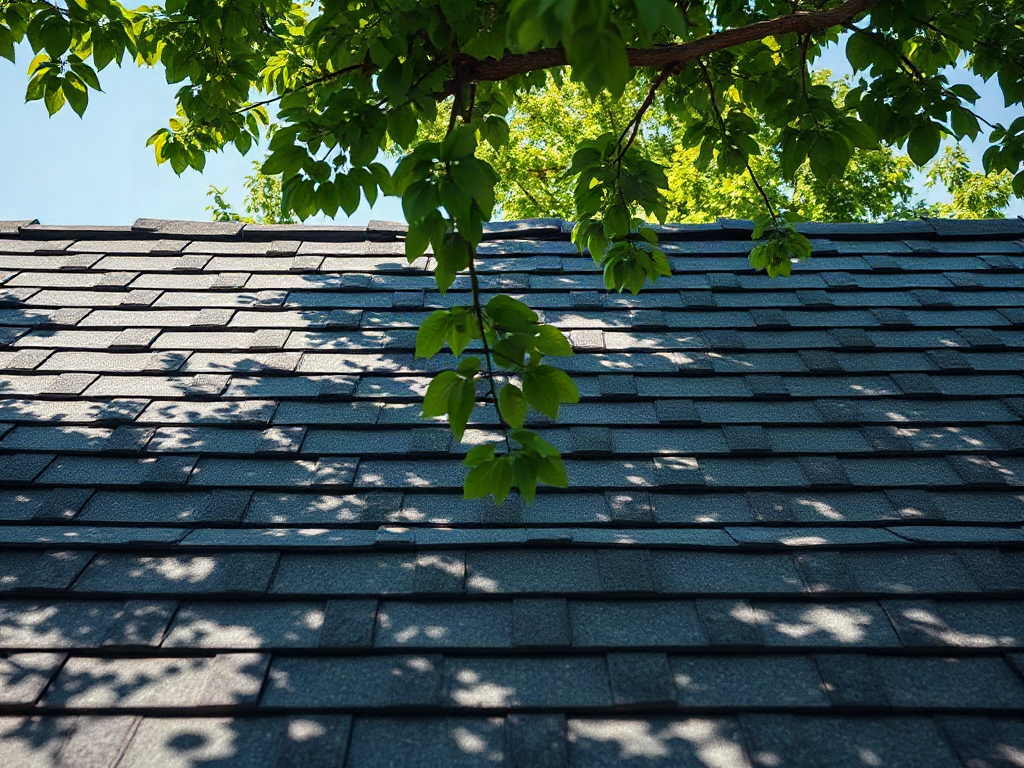
Algae streaks on shingles without roof damage are usually a cosmetic growth of blue-green algae rather than evidence that asphalt shingles are failing. The dark trails often develop on shaded, humid roof slopes where airborne algae feed on limestone filler and moisture lingers. Safe removal generally means using the shingle manufacturer’s approved low-pressure cleaning solution, protecting nearby plants, and allowing the treatment to work without scrubbing. Pressure washing, abrasive brushing, and walking unnecessarily on the surface can loosen granules or break shingles.
What you’ll learn
This guide covers the following practical points:
- Why Dark Streaks Form on Asphalt Shingles — Dark roof streaks commonly begin where shade, humidity, and slow drying create favorable conditions for algae.
- How to Separate Cosmetic Staining From Damage — Cosmetic algae staining usually follows the slope in diffuse dark bands while the shingles remain flat, continuous, and evenly surfaced.
- Safe Algae Removal Without Harming Shingles — Low-pressure chemical treatment is generally safer for asphalt shingles than mechanical cleaning, but the exact mixture and procedure should come from the shingle manufacturer.
- How to Slow the Return of Algae — Reducing persistent shade and moisture can delay regrowth, although it cannot keep airborne algae off a roof permanently.
Why Dark Streaks Form on Asphalt Shingles
Dark roof streaks commonly begin where shade, humidity, and slow drying create favorable conditions for algae. The organism associated with this staining is often called blue-green algae, although it is a type of cyanobacteria. Air currents carry it between roofs, so staining does not mean the house is poorly maintained.
Modern asphalt shingles often contain limestone filler that can provide material on which the growth persists. Rain then washes the dark discoloration downward, producing long trails rather than evenly colored patches. North-facing slopes and areas beneath overhanging branches usually show staining first because they receive less direct sun. A roof may therefore have a heavily streaked rear slope while its sunnier front remains clear.
The stain itself is generally a surface appearance issue, not proof that algae have eaten through the shingles. It can still affect curb appeal and may conceal subtle defects during a ground-level inspection. A common misconception is that every dark area is algae; soot, tree debris, manufacturing color variation, and moisture around a leak can look different but require different responses.
How to Separate Cosmetic Staining From Damage
Cosmetic algae staining usually follows the slope in diffuse dark bands while the shingles remain flat, continuous, and evenly surfaced. Compare stained and unstained areas from the ground with binoculars or inspect photographs taken safely from a ladder at the eave. The goal is to evaluate shingle condition separately from color.
Look for defects that algae alone does not explain:
- Missing, cracked, curled, or lifted shingle tabs
- Bare spots with obvious granule loss or exposed reinforcement
- Sagging roof planes or soft decking
- Damaged flashing around chimneys, walls, vents, or skylights
- Ceiling stains, damp attic sheathing, or active dripping
- Thick moss that lifts shingle edges rather than flat discoloration
For example, black trails below a shaded ridge can be consistent with algae, but a sharply defined stain below a damaged vent combined with damp attic wood warrants leak investigation. Color alone cannot confirm whether the roof is sound. If access requires walking on a steep, wet, brittle, or high roof, a qualified roofing contractor should perform the inspection. Falling is a greater immediate hazard than cosmetic growth.
Safe Algae Removal Without Harming Shingles
Low-pressure chemical treatment is generally safer for asphalt shingles than mechanical cleaning, but the exact mixture and procedure should come from the shingle manufacturer. Warranty instructions differ, and an improvised strong solution may discolor roofing, corrode nearby metals, or damage vegetation. Confirm the roof material before applying any cleaner because methods suitable for asphalt may not suit wood, tile, or metal.
A careful cleaning process follows these priorities:
- Check the roof first. Repair loose shingles, failed flashing, and drainage problems before treating stains.
- Verify approved products. Follow the roofing manufacturer’s cleaning and warranty guidance, including dilution, contact time, and rinsing instructions.
- Protect the property. Divert downspouts where appropriate, wet susceptible plants, cover delicate landscaping, and prevent runoff from entering ponds.
- Apply without force. Use low-pressure application and let the cleaner act rather than scrubbing away the shingle surface.
- Assess after drying. Staining may fade gradually through treatment and subsequent weather rather than disappearing immediately.
Pressure washing is the major avoidable mistake. A concentrated jet can dislodge protective granules, force water beneath laps, and create visible cleaning lines. Wire brushes and aggressive brooms pose similar risks. Repeated applications made too close together can also cause damage even when each treatment seems mild. Stop if shingles loosen, runoff becomes difficult to control, or the product instructions conflict with site conditions.
How to Slow the Return of Algae
Reducing persistent shade and moisture can delay regrowth, although it cannot keep airborne algae off a roof permanently. Trim branches that touch the roof or heavily restrict sunlight, while preserving tree health and safe clearance from power lines. Keep gutters and roof valleys free of debris so water leaves the surface instead of lingering along shingle edges.
Zinc or copper strips installed near a ridge can release metal ions as rainwater passes over them, discouraging growth below the strip. Their effect may be uneven on complex roofs, and installation should not involve exposed fasteners or careless lifting of existing shingles. Metal runoff may also affect sensitive plants or interact with other roof metals, so suitability should be reviewed before installation.
When replacement is already justified by age or physical deterioration, algae-resistant shingles containing protective granules may be worth considering. Replacing otherwise serviceable shingles solely because they are stained is usually a disproportionate response. A better decision sequence is to confirm that the condition is cosmetic, clean only with an approved method, and monitor whether staining returns or physical defects develop.
Frequently Asked Questions
Do black algae streaks mean asphalt shingles are failing?
Not by themselves. Flat dark streaks are often cosmetic, but cracked tabs, exposed reinforcement, leaks, sagging, or substantial granule loss point to separate deterioration.
Can algae be removed with a pressure washer?
Pressure washing is not a prudent method for asphalt shingles because the jet may remove granules or drive water beneath the roofing. Use only a manufacturer-approved low-pressure process.
Will rain wash roof algae away naturally?
Ordinary rain may lighten loose residue but usually does not remove established growth. After an approved treatment, later rainfall may help the remaining discoloration fade gradually.
Is moss the same as algae staining?
No. Algae commonly creates flat discoloration, while moss forms thicker growth that can retain moisture and lift shingle edges. Moss requires a more cautious condition assessment.
When should a roofing contractor inspect the streaks?
Arrange an inspection when staining accompanies leaks, curled or missing shingles, soft decking, flashing defects, heavy granule loss, or any roof that cannot be accessed safely.
Conclusion
Treat streaking as a condition to identify before choosing a cleaner. Confirm that the shingles remain flat and intact, rule out leaks and moss, and consult the manufacturer’s instructions before applying any product. Avoid pressure washing and unnecessary roof traffic. If the discoloration is cosmetic, controlled low-pressure treatment and better drying conditions are more proportionate than replacement; visible deterioration calls for a professional roof assessment instead.