Instant Insight: Hydroponics gardening allows for faster plant growth and higher yields compared to traditional soil gardening, as plants receive nutrients directly through water. It uses less water, making it more sustainable and efficient, especially in areas with limited water resources. Additionally, hydroponics can be practiced indoors or in small spaces, providing year-round cultivation regardless of outdoor weather conditions. This method also reduces soil-borne pests and diseases, leading to healthier plants and less need for chemical treatments.
Article Guide
- Benefits of Hydroponics Gardening for Faster, Sustainable Growth
- Introduction to Hydroponics Gardening
- Advantages of Hydroponics Over Traditional Gardening
- Types of Hydroponic Systems and Their Benefits
- Implementing Hydroponics: Practical Steps
- Maximizing Growth and Sustainability
- Challenges and Solutions in Hydroponic Gardening
- Real-World Success Stories
- Conclusion: Embrace the Future of Gardening
- Common Questions People Ask
- What are common types of hydroponic systems used by beginners?
- What are the key nutrients needed for hydroponic plants?
- What tips can help beginners succeed with hydroponics gardening?
Benefits of Hydroponics Gardening for Faster, Sustainable Growth
Hydroponics gardening transforms the way we grow plants by delivering nutrients directly through water, resulting in remarkably faster growth and bountiful harvests. This soil-less approach not only accelerates plant development but also conserves water, making it an appealing choice for those seeking sustainable solutions in limited spaces. Whether tucked into a cozy corner indoors or set up in a small backyard, hydroponics offers a reliable way to cultivate fresh produce year-round, regardless of outdoor weather. Plus, by sidestepping soil-borne pests and diseases, it promotes healthier plants with fewer chemical interventions, fostering a more eco-friendly gardening experience.
Introduction to Hydroponics Gardening
Hydroponics gardening is an innovative method of growing plants without soil, using nutrient-rich water solutions to deliver essential minerals directly to plant roots. This technique has gained popularity among urban farmers, hobbyists, and commercial growers due to its efficiency and sustainability. Unlike traditional soil-based cultivation, hydroponics allows for precise control over environmental factors, leading to faster growth rates and higher yields.
Advantages of Hydroponics Over Traditional Gardening
- Accelerated Plant Growth: Hydroponic systems can promote plant growth rates up to 25-50% faster than soil-based methods. For example, lettuce and herbs typically mature in 3-4 weeks hydroponically, compared to 4-6 weeks in soil.
- Efficient Use of Resources: Hydroponics uses up to 90% less water than traditional farming because water is recirculated within the system, minimizing waste. This makes it especially valuable in arid regions or areas with limited water resources.
- Higher Yields and Quality: Controlled environments reduce pests and diseases, resulting in cleaner produce with fewer chemical interventions. This often translates into higher-quality crops and increased harvests per square foot.
- Space-Saving Design: Hydroponic setups can be stacked vertically or arranged in compact configurations, making them ideal for urban environments or small backyards where space is limited.
- Reduced Soil Dependency: Eliminates issues related to soil-borne pests, diseases, and nutrient deficiencies, providing a cleaner and more predictable growing environment.
Types of Hydroponic Systems and Their Benefits
There are several hydroponic system types, each suited to different crops and space considerations:
Deep Water Culture (DWC)
In DWC systems, plant roots are suspended in a nutrient-rich oxygenated water solution. This method is simple to set up and ideal for leafy greens like lettuce, spinach, and herbs. The constant oxygen supply promotes rapid growth, often resulting in harvests within 3-4 weeks.
Nutrient Film Technique (NFT)
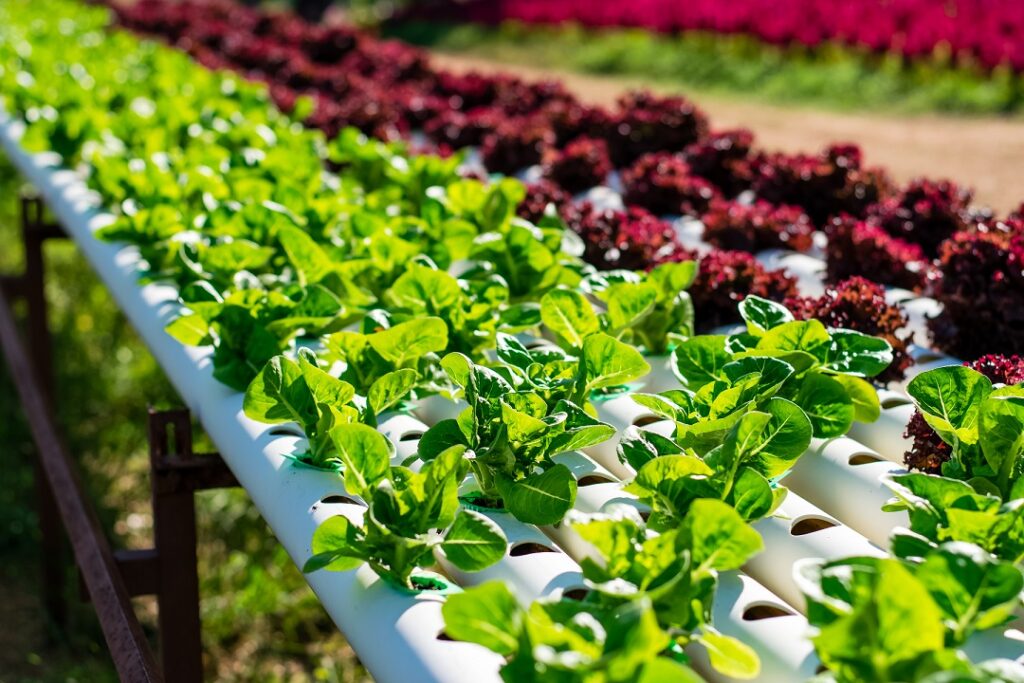
NFT involves a thin film of nutrient solution flowing over the roots of plants in a slight incline. This system is efficient for small, fast-growing plants such as lettuce, basil, and strawberries. Its continuous flow ensures roots receive nutrients and oxygen simultaneously, leading to quick development.
Drip Systems
In drip hydroponics, nutrient solution is delivered directly to the base of each plant through a network of tubes and emitters. This system allows precise control over individual plant nutrition, making it suitable for larger crops like tomatoes, peppers, and cucumbers.
Aeroponics
Plants are suspended in air, with roots misted regularly with nutrient solution. Aeroponics maximizes oxygen exposure and nutrient absorption, resulting in rapid growth. It is often used in research and commercial operations for high-value crops.
Implementing Hydroponics: Practical Steps
Step 1: Choose the Right System
Assess your available space, budget, and the types of plants you wish to grow. For beginners, Deep Water Culture or simple drip systems are recommended due to their ease of setup and maintenance. For more advanced growers, NFT or aeroponics can offer higher efficiency and yields.
Step 2: Gather Materials and Equipment
- Container or Reservoir: A waterproof tank to hold the nutrient solution.
- Growing Medium: Materials like coconut coir, perlite, or clay pellets to support plant roots.
- Nutrient Solution: Commercially available hydroponic fertilizers formulated for specific crops.
- Lighting: LED grow lights for indoor setups or natural sunlight for outdoor systems.
- Air Pump and Aeration Stones: To oxygenate the water in DWC systems.
- Piping and Pumps: For nutrient delivery and circulation.
Step 3: Set Up Your System
Arrange your container and install the necessary piping and pumps. Fill the reservoir with water and add the appropriate amount of hydroponic fertilizer, following manufacturer instructions. Place your plants in the growing medium, ensuring their roots are adequately submerged or exposed to the nutrient flow, depending on the system.
Step 4: Monitor and Maintain
Regularly check pH levels (ideally between 5.5 and 6.5), nutrient concentration, and water temperature. Adjust nutrient concentrations as plants grow and seasons change. Keep an eye out for signs of nutrient deficiencies or pests, and maintain cleanliness to prevent disease.
Maximizing Growth and Sustainability
To ensure your hydroponic garden thrives, consider integrating sustainable practices:
- Use Organic Nutrients: Opt for organic fertilizers and compost teas to reduce chemical inputs and improve soil-like microbial health in your system.
- Implement Renewable Energy: Power your lighting and pumps with solar panels to reduce carbon footprint.
- Recycle Water and Nutrients: Design your system to recirculate water efficiently, minimizing waste and conserving resources.
- Choose Native or Adapted Crops: Grow plants suited to your climate to reduce energy and resource inputs needed for heating, cooling, or supplemental lighting.
Challenges and Solutions in Hydroponic Gardening
While hydroponics offers numerous benefits, it also presents specific challenges:
- Initial Setup Cost: The equipment can be expensive initially, but costs decrease over time with proper maintenance and scaling.
- Technical Knowledge: Managing nutrient levels, pH, and system maintenance requires some learning. Resources like online tutorials, local gardening clubs, and extension services can provide valuable guidance.
- Power Dependency: Hydroponic systems rely on electricity for pumps and lighting. Incorporating backup power sources or manual systems can mitigate disruptions.
- Disease Management: Waterborne diseases can spread rapidly. Maintaining cleanliness, monitoring plant health, and using sterilized equipment are essential preventive measures.
Real-World Success Stories
Many urban farms and research projects have demonstrated the effectiveness of hydroponics. For instance, the Brooklyn Grange in New York City operates one of the world’s largest rooftop soil-less farms, growing over 50 varieties of vegetables and herbs using hydroponic and aeroponic systems. Their approach allows for year-round production, significantly reducing transportation emissions and providing fresh produce to local communities.
Similarly, NASA has experimented with hydroponic systems aboard the International Space Station to develop sustainable food sources for long-duration missions. These experiments have shown that plants like lettuce and radishes can grow rapidly in microgravity environments, highlighting hydroponics’ potential for space exploration and extreme environments.
Conclusion: Embrace the Future of Gardening
Hydroponic gardening is not just a trend but a practical, sustainable solution for modern food production. Its ability to accelerate plant growth, conserve resources, and produce high-quality crops makes it an attractive option for urban dwellers, commercial farmers, and environmental advocates alike. By understanding the different systems, implementing best practices, and addressing potential challenges, you can create a thriving hydroponic garden that contributes to a more sustainable future.
Common Questions People Ask
What are common types of hydroponic systems used by beginners?
Common hydroponic systems suitable for beginners include the nutrient film technique (NFT), deep water culture (DWC), and wick systems. These setups are relatively simple to assemble and maintain, requiring minimal technical knowledge. They also allow for easy monitoring of nutrient levels and water pH, which are crucial for plant health.
What are the key nutrients needed for hydroponic plants?
Hydroponic plants require a balanced supply of essential nutrients, including nitrogen, phosphorus, potassium, calcium, magnesium, and trace minerals like iron, manganese, zinc, copper, molybdenum, and boron. Since there is no soil to provide these nutrients naturally, they must be added through specially formulated hydroponic nutrient solutions. Proper nutrient management is vital for healthy plant growth and optimal yields.
What tips can help beginners succeed with hydroponics gardening?
Beginners benefit from starting with the basics of hydroponics gardening and focusing on core practices. Setting realistic goals and building skills gradually can boost confidence. Seeking out reputable tutorials or mentors accelerates progress and reduces frustration. Patience and consistency are key to mastering the essentials and moving on to more advanced techniques.